
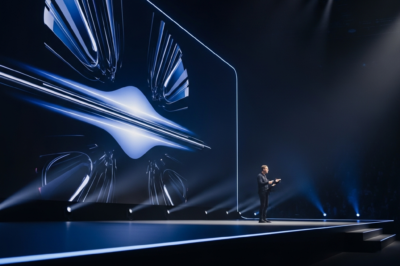
The tech world stood still today as Apple Park opened its doors for the highly anticipated Worldwide Developers Conference (WWDC) 2026. The atmosphere at the Steve Jobs Theater was electric, buzzing with the kind of excitement that only a generational shift in computing can provoke. This year’s keynote wasn’t just another incremental update; it was a manifesto for a future where artificial intelligence and human intuition are indistinguishable. As Tim Cook took the stage, the focus was singular: the evolution of iOS 27 and a complete architectural overhaul of Siri, moving away from a simple voice assistant to a proactive, generative digital companion. With over 6,000 developers in attendance and millions watching the livestream, Apple demonstrated that it is no longer just chasing the AI trend but is now defining its peak utility. The stakes have never been higher, as competitors have surged forward with LLM-integrated operating systems, but Apple’s 2026 presentation suggests they have been playing a much longer game focused on privacy, deep-core integration, and seamless user experience.
The Background: From Siri’s Origins to the 2026 Pivot
To understand the magnitude of today’s announcements, one must look back at the trajectory of Apple’s software philosophy over the last decade. Siri, which debuted as a revolutionary feature on the iPhone 4S in 2011, had long been criticized for falling behind the conversational capabilities of rivals. However, the groundwork for today’s leap was laid in 2024 and 2025 with the introduction of Apple Intelligence. In 2026, we are seeing the finalization of that transition. iOS 27 represents the first operating system designed from the kernel up to support on-device large language models (LLMs) without compromising the battery life or thermal efficiency of the iPhone 17 and iPhone 18 series. Historically, Apple has prioritized stability over bleeding-edge features, but the sheer speed of AI development necessitated a more aggressive roadmap. Today’s keynote proved that the internal reorganization of Apple’s software engineering teams, merging core OS development with the Neural Engine specialists, has finally paid off in a cohesive, fluid ecosystem.
iOS 27: A Paradigm Shift in User Interface and Personalization
iOS 27 introduces what Apple calls the ‘Fluid Interface 2.0.’ For the first time, the home screen is no longer a static grid of icons but a dynamic workspace that adapts to the user’s cognitive load and physical context. Using the new A20 Pro chip’s enhanced Neural Engine, iOS 27 predicts which apps and widgets you need before you even realize you need them. A feature called ‘Temporal Layout’ automatically adjusts your lock screen and home screen based on your schedule, biometric stress levels detected by the Apple Watch, and even the ambient noise levels around you. For instance, during a high-stress work meeting, iOS 27 automatically silences non-essential notifications and brings productivity tools to the forefront. Beyond aesthetics, the system architecture has been optimized for ‘Zero-Latency App Switching,’ utilizing a new memory management system that keeps active AI processes in a suspended state of readiness. The visual language has also evolved; the glass-morphism of previous years has been replaced by ‘Organic Depth,’ a UI style that uses real-time ray-tracing to create shadows and lighting effects that react to the physical tilt of the phone, making the screen feel like a physical window into a digital world.
The Rebirth of Siri: Truly Generative and Contextually Aware
The centerpiece of the event was undoubtedly the new Siri. No longer confined to simple ‘If-This-Then-That’ logic, Siri is now powered by the ‘Apple Neural Model 5 (ANM-5).’ This generative engine allows Siri to understand complex, multi-layered commands. During the live demo, an Apple executive asked Siri to ‘Find the budget spreadsheet I was working on last Tuesday, highlight the discrepancies in the marketing column, and draft a polite email to Sarah about it.’ Siri performed the task in seconds, navigating between Excel, Mail, and Calendar with human-like precision. This is made possible through ‘On-Device Semantic Indexing,’ where Siri maintains a local, encrypted database of all your interactions across the device. Privacy remains the cornerstone, with Apple emphasizing that this personal data never leaves the device’s Secure Enclave. The new Siri also features a more natural, emotive voice profile that can detect sarcasm, urgency, and hesitation in the user’s voice, adjusting its tone accordingly to be more empathetic or professional.
Apple Intelligence 2.0: Privacy-First AI Infrastructure
One of the most significant technical hurdles for AI is the balance between processing power and data privacy. At WWDC 2026, Apple introduced ‘Private Cloud Compute 2.0.’ When a task is too complex for the iPhone’s on-device silicon, it is routed to Apple-silicon-powered servers. The innovation here is ‘Ephemeral Processing,’ where the data is processed in a stateless environment—meaning the server literally forgets the data the millisecond the computation is complete. Apple also announced a partnership with independent auditors to provide real-time verification of these privacy claims, a move intended to set a new industry standard. This infrastructure supports new features like ‘System-Wide Image Synthesis,’ allowing users to generate high-fidelity graphics and UI elements within any app using simple natural language descriptions. Whether you are designing a presentation in Keynote or a custom emoji in Messages, the AI serves as a creative co-pilot, trained on a curated library of high-quality assets to ensure the output matches Apple’s aesthetic standards.
The Developer Ecosystem: New APIs for a New Era
For the thousands of developers in the audience, the introduction of ‘SiriKit Ultra’ and the ‘Generative Framework’ was the highlight. These new tools allow third-party developers to plug directly into Siri’s generative capabilities. In the past, Siri’s interaction with apps was limited to specific ‘intents.’ Now, with ‘Deep-Link Reasoning,’ Siri can understand the internal structure of any app that adopts the new API. This means a travel app could allow a user to say, ‘Siri, find a beach house in Bali that has a pool and is available for the first week of July,’ and Siri would execute the search within the app as if the user were manually clicking buttons. Furthermore, Apple revealed ‘Swift AI,’ a coding assistant integrated into Xcode 18 that can generate entire modules of code, perform automated unit testing, and suggest optimizations for the A20 Pro chip. This is expected to drastically reduce development time for startups and independent developers, fostering a new wave of ‘AI-native’ applications.
Convergence: iOS 27 and the Vision Pro Integration
While the focus was on the iPhone, the synergy between iOS 27 and the Vision Pro (running visionOS 4) was a recurring theme. Apple introduced ‘Spatial Handoff,’ a feature that allows users to ‘pull’ an app from their iPhone screen into the 3D space of the Vision Pro just by looking at the phone while wearing the headset. The AI-driven Siri acts as the bridge between these devices. For example, if you are editing a video on your iPhone using the new AI-powered Final Cut mobile, you can transition to a full spatial editing suite on the Vision Pro without losing a single frame or setting. This ecosystem lock-in is stronger than ever, as the shared AI model understands the user’s intent across different hardware form factors. The keynote also teased ‘Spatial Personas 2.0,’ which uses the iPhone’s front-facing TrueDepth camera to create even more realistic avatars for FaceTime calls, capturing subtle facial movements and micro-expressions that were previously lost in translation.
Future Outlook: What This Means for the Tech Landscape
The implications of WWDC 2026 reach far beyond the Apple ecosystem. By successfully integrating generative AI into the core of the mobile experience while maintaining a strict privacy stance, Apple has challenged the business models of data-hungry AI companies. The move toward on-device processing will likely force competitors to invest more heavily in their own custom silicon. As iOS 27 begins its beta phase, the industry will be watching closely to see if the ‘Neural Siri’ can truly live up to the live demo’s promises. If successful, we are entering an era where the smartphone is no longer a tool we use, but a digital extension of our own consciousness—capable of managing our digital lives with minimal oversight. As the keynote concluded, the message was clear: Apple believes the future of technology is not about more screens or more data, but about more meaningful, invisible assistance. The release of iOS 27 this fall will be the ultimate test of that vision, potentially marking the beginning of the post-app era where the interface is conversation and the OS is intelligence.






































Leave a Reply