
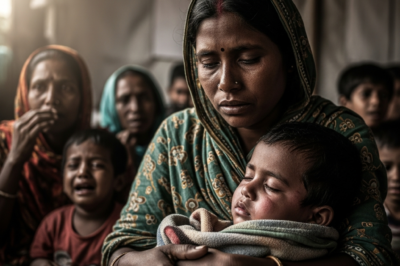
The burgeoning health crisis in Bangladesh has reached a critical and tragic milestone as the death toll from a widespread measles outbreak has officially climbed to 194 children, according to the latest reports from the Directorate General of Health Services (DGHS) and international monitoring agencies. This alarming figure represents one of the most significant resurgences of the preventable viral disease in the region in recent years, casting a shadow over the nation’s previous successes in child immunization. As the crisis deepens, medical professionals and humanitarian organizations are sounding the alarm, emphasizing that the window for containment is narrowing. The current situation in Bangladesh is not merely a local health issue but a stark indicator of the fragility of global immunization systems in the wake of recent global disruptions. The loss of nearly two hundred young lives highlights a systemic failure to reach the most vulnerable populations, particularly in remote rural areas and overcrowded urban slums where the virus finds fertile ground to spread. This article provides a comprehensive analysis of the factors contributing to this surge, the demographic impact, and the urgent measures required to halt the mortality rate.
The Historical Context of Measles Control in Bangladesh
For decades, Bangladesh was celebrated as a success story in the realm of public health, specifically regarding its Expanded Program on Immunization (EPI). The country had made remarkable strides in reducing child mortality, with measles-related deaths falling significantly since the early 2000s. However, the current outbreak suggests a reversal of these hard-won gains. Historically, Bangladesh relied on a robust network of community health workers who went door-to-door to ensure that infants received their Measles-Rubella (MR) vaccinations. The success of these campaigns led to a period of relative stability where measles was seen as a manageable threat rather than a lethal epidemic. Yet, the current crisis reveals that the coverage was perhaps not as uniform as once believed. Experts point out that while national averages looked promising, specific sub-populations—including ethnic minorities in the Hill Tracts and floating populations in Dhaka—remained chronically under-vaccinated. This historical context is essential to understanding the present crisis, as it underscores that the virus did not emerge from a vacuum but rather exploited existing gaps that have widened over the last three to four years.
The Impact of Global Disruptions on Local Immunization
One cannot discuss the current measles crisis in Bangladesh without addressing the catastrophic impact of the COVID-19 pandemic on routine healthcare services. Between 2020 and 2022, the diversion of resources toward pandemic management led to a significant decline in routine childhood vaccinations. In Bangladesh, as in many other developing nations, lock-down measures, fear of hospital-acquired infections, and the reassignment of vaccination staff to COVID-19 duties created a ‘missing cohort’ of children. Thousands of children missed their first or second dose of the MR vaccine during this period, creating a large pool of susceptible individuals. Measles is one of the most contagious diseases known to science, requiring a population immunity level of approximately 95% to achieve herd immunity. When immunization rates dip even slightly below this threshold, the virus can spread with devastating speed. The 194 deaths reported are a direct consequence of this immunity gap, as the virus now moves through communities of children who were bypassed during the height of the pandemic’s logistical challenges.
Geographical Hotspots and Vulnerable Populations
The current outbreak has not affected the country uniformly. Data indicates that certain regions are bearing a disproportionate burden of the mortality. The coastal districts and the northern border regions have reported higher clusters of cases. Particularly concerning is the situation in the Rohingya refugee camps in Cox’s Bazar, where high population density and limited sanitation facilities create a tinderbox for infectious diseases. Although intensive vaccination drives have been conducted in these camps, the constant movement of people and the high birth rate make it difficult to maintain comprehensive coverage. In urban centers like Dhaka and Chattogram, the crisis is fueled by the rapid growth of informal settlements where healthcare access is intermittent at best. These ‘hotspots’ serve as epicenters from which the virus radiates to surrounding districts. The 194 child deaths represent families often living in extreme poverty, where the cost of seeking medical care or the lack of awareness about the severity of measles symptoms can lead to delays in treatment, often with fatal outcomes.
Clinical Manifestations and the Role of Malnutrition
Measles is often mischaracterized as a simple childhood rash, but in the context of a developing nation like Bangladesh, it is a multi-systemic assault on the body. The virus severely weakens the immune system, leading to what clinicians call ‘immune amnesia,’ where the body forgets how to fight off other pathogens. Most of the 194 deaths are not caused by the measles virus alone, but by secondary complications such as severe pneumonia, encephalitis, and diarrhea. Malnutrition plays a synergistic role in this mortality; a child suffering from Vitamin A deficiency is far more likely to experience blindness or death when infected with measles. In many parts of Bangladesh, where food insecurity remains a challenge, the combination of a viral outbreak and poor nutritional status is lethal. Health authorities have noted that many of the deceased children were already underweight, making them unable to withstand the high fevers and respiratory distress associated with the disease. This intersection of infectious disease and nutrition is a critical focal point for current relief efforts.
The Government and International Response
In response to the escalating death toll, the Bangladesh Ministry of Health and Family Welfare has launched an emergency vaccination campaign targeting millions of children between the ages of 9 months and 15 years. International partners, including the World Health Organization (WHO), UNICEF, and Gavi, the Vaccine Alliance, are providing technical and financial support. These efforts include the distribution of Vitamin A supplements to boost the immunity of infected children and the deployment of mobile clinics to hard-to-reach areas. However, the scale of the crisis has put a strain on the existing medical infrastructure. Hospitals in the most affected districts are reportedly overwhelmed, with pediatric wards exceeding capacity. There is also an urgent need for public awareness campaigns to combat vaccine hesitancy, which has seen a slight uptick due to misinformation circulating on social media. The government’s strategy now focuses on ‘mop-up’ activities, where teams revisit areas with low coverage to ensure no child is left behind. The success of these interventions will determine whether the death toll stabilizes or continues its tragic ascent.
Future Outlook and Policy Recommendations
As Bangladesh grapples with this immediate emergency, the long-term outlook requires a fundamental shift in how public health is managed. The current crisis serves as a wake-up call that routine immunization must be treated as a permanent priority, shielded from the disruptions of other global health crises. Strengthening the ‘cold chain’—the refrigerated transport and storage system for vaccines—is vital for ensuring vaccine efficacy in the country’s tropical climate. Furthermore, there must be a renewed focus on community-led surveillance to detect outbreaks at their earliest stages. Policy experts suggest that Bangladesh should integrate measles surveillance with other primary healthcare services to ensure a more holistic approach to child health. The 194 deaths are a somber reminder that in the fight against infectious diseases, there is no room for complacency. To prevent future tragedies, the nation must invest in resilient health systems that can withstand both local outbreaks and global shocks, ensuring that every child, regardless of their socio-economic status, is protected from preventable diseases.
Conclusion: A Call for Urgent Action
The death of 194 children from a disease that has a safe, effective, and inexpensive vaccine is a profound tragedy that demands global attention. The deepening measles crisis in Bangladesh is a complex phenomenon driven by a combination of pandemic-related disruptions, geographical challenges, and socio-economic vulnerabilities. While the current emergency response is necessary, it must be followed by a sustained commitment to rebuild and strengthen the national immunization infrastructure. The international community must also play its part by ensuring that countries like Bangladesh have the resources and technical support needed to maintain high vaccination coverage. As the nation mourns the loss of its youngest citizens, the focus must remain on the singular goal of ending the transmission of the virus. Only through a coordinated, well-funded, and scientifically-backed effort can Bangladesh move past this crisis and ensure that such a high price is never paid again for a preventable illness.






































Leave a Reply