
In Shorts
- A major national conference is set to review and restructure central schemes for India’s vast handicrafts and handloom sectors.
- Key goals include creating a stronger state-level governance model and fostering convergence between various government departments.
- States will share best practices in marketing, cluster development, and skill-building to create a replicable national roadmap.
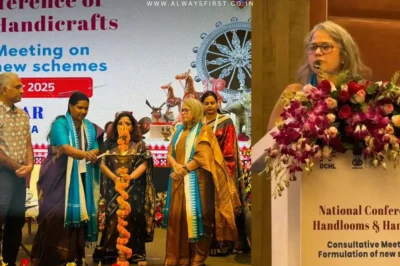
NEW DELHI, India – The intricate threads of India’s handicrafts and handloom sectors, which sustain the livelihoods of millions and embody the nation’s cultural soul, are set for a significant re-weaving. The Ministry of Textiles has announced a landmark National Conference, scheduled for October 31st and November 1st, 2025, aimed at fundamentally restructuring the governance and implementation of support schemes for these vital industries.
Organized by the Offices of the Development Commissioners for Handicrafts and Handlooms, the conference, titled “Weaving Traditions, Crafting Futures,” stems from a critical need to enhance the efficiency and reach of existing programs. While schemes like the National Handicrafts Development Programme (NHDP) and the National Handloom Development Programme have driven growth, the government acknowledges a pressing need for better last-mile delivery and deeper coordination with state governments.
Leadership Voices Chart the Course
The conference was steered by the senior leadership of the textile ministry, with Ms. Amrit Raj, Development Commissioner (Handicrafts), and Dr. M. Beena, IAS, Development Commissioner (Handloom), playing pivotal roles. In their addresses, both officials underscored the immense potential of the sectors and outlined a forward-looking vision focused on digital integration, market-led growth, and sustainable artisan upliftment. Their insights set the tone for the collaborative discussions, emphasizing that the future of these traditions depends on innovative and inclusive policy-making.
Building a Robust Framework for Growth
The primary objective of the two-day summit is to move beyond incremental changes and architect a new, collaborative action plan. Key discussion points will include a thorough review of ongoing schemes, identifying persistent bottlenecks, and exploring powerful avenues for convergence with initiatives from other ministries like MSME, Tourism, and Rural Development.
A central proposal on the table is the creation of dedicated State-level Handicrafts and Handloom Missions or Directorates. This proposed structural shift is designed to ensure integrated planning, tighter monitoring, and a more efficient flow of funds, ultimately aiming to multiply the reach of government support to the artisan community.
In a powerful symbolic gesture that preceded the conference, Chief Secretary of the Odisha government, Shri Manoj Ahuja, led officials in taking the Integrity Pledge on Ekta Diwas (National Unity Day), reinforcing the government’s commitment to transparent and accountable governance in the service of the sector.
Cross-Learning and a Marketplace of Ideas
A significant portion of the conference will function as a national platform for cross-learning. States recognized for their innovative models will present their success stories. For instance, Assam will share its initiatives in women’s empowerment through handloom marketing, Odisha will showcase its approach to celebrating crafts through museums and villages, and Karnataka will detail its successes in integrated cluster development for artisans.
These best practices, covering six core verticals—marketing, skill development, cluster development, welfare, infrastructure, and research & development—will provide tangible blueprints for other regions to adopt and adapt.
Charting the Road Ahead
The expected outcomes of this collaborative dialogue are substantial. The Ministry aims to emerge with a set of actionable recommendations to refine scheme components, a formalized framework for central-state institutional coordination, and a clear outline for a new, more effective governance structure.
By bringing state officials, policymakers, and field experts to a common platform, the conference seeks to ensure that the rich legacy of India’s weavers and artisans is not only preserved but powerfully propelled into a future of sustainable growth and global market relevance. The decisions made here promise to shape the destiny of one of India’s most iconic and employment-intensive sectors for years to come.



































Leave a Reply