
In Shorts
- Delhi’s overall Air Quality Index (AQI) has deteriorated into the ‘Severe’ category, posing significant health risks.
- Key monitoring stations, including Anand Vihar and Wazirpur, have reported AQI levels soaring well above 400.
- Despite the alarming data, the enforcement of Stage III of the GRAP plan, which includes a ban on certain construction and vehicles, has not been officially implemented.
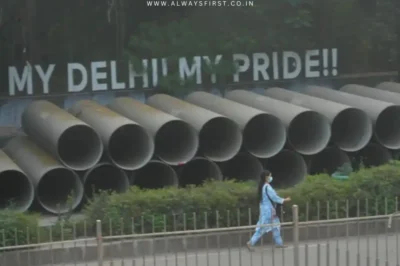
New Delhi: The residents of India’s capital awoke to a familiar, yet alarming, sight on Tuesday—a thick, oppressive layer of smog blanketing the city. Delhi’s air quality has sharply deteriorated, officially entering the ‘Severe’ zone, a development that has triggered public health concerns and raised urgent questions about the enforcement of mandated pollution control measures.
According to data from the Central Pollution Control Board (CPCB), the city’s overall Air Quality Index (AQI) crossed the 400 mark, a threshold that signifies ‘Severe’ conditions capable of affecting healthy individuals and seriously impacting those with existing respiratory ailments. The situation was particularly dire in several hotspots, with Anand Vihar recording an AQI of 440 and Wazirpur registering 460, painting a grim picture of the air residents are forced to breathe.
This sharp decline has cast a spotlight on the Graded Response Action Plan (GRAP), the central government’s own protocol for combating air pollution in the National Capital Region (NCR). As per GRAP guidelines, the transition into the ‘Severe’ AQI category (401-450) should automatically trigger the implementation of Stage III restrictions.
These measures are designed to curb emissions at source and include a ban on private construction activities, the operation of BS-III petrol and BS-IV diesel four-wheelers in certain areas, and the possible closure of stone crushers and mining activities. However, as of now, the Commission for Air Quality Management (CAQM), the central body responsible for the plan, has not officially declared the enforcement of GRAP Stage III.
This delay has left environmentalists and citizens alike perplexed. The very foundation of GRAP is its pre-emptive and swift action based on air quality data, not forecasts. The current scenario, where the city is already in the ‘Severe’ zone without the corresponding measures, has led to criticism and calls for immediate intervention.
With weather conditions expected to remain unfavorable for the dispersion of pollutants, the question on every Delhiite’s mind is how long they must wait for the authorities to activate the full suite of emergency measures designed to protect their health and clear the hazardous air.


































Leave a Reply