
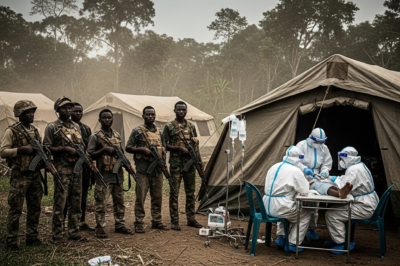
The Democratic Republic of Congo (DRC) is once again on high alert as a fresh Ebola outbreak surges through its eastern provinces, venturing into territories currently under the control of armed rebel groups. This intersection of a deadly viral pathogen and active military conflict presents a nightmare scenario for humanitarian workers and health officials trying to contain the spread. As the virus infiltrates areas where government authority is limited, the risk of a widespread epidemic increases exponentially.
The Intersection of Conflict and Contagion
In eastern DR Congo, the presence of various militia groups has long destabilized the region, creating a porous and dangerous environment. As Ebola cases are confirmed in rebel-held areas, the ability of the World Health Organization (WHO) and local health ministries to track contacts and administer vaccines is severely hampered. Accessing these zones requires complex negotiations with non-state actors, often delaying life-saving interventions by days or weeks. Health officials warn that the lack of visibility in these conflict zones could lead to undetected transmission chains. This not only threatens the local population but also risks spilling over into neighboring provinces and countries, given the high mobility of displaced persons and traders in the region.
Global Health Response and Hurdles
Despite the precarious security situation, medical teams are deploying advanced countermeasures, including the Ervebo vaccine and experimental monoclonal antibody treatments. However, the physical danger to medical personnel remains a significant barrier. Recent history in the DRC has shown that health centers are often targets of violence, fueled by misinformation and community mistrust of external interventions. The global community is being urged to provide not only medical supplies but also security guarantees for health corridors. Without a stable environment, the technical tools to fight Ebola—such as rapid testing and isolation—become nearly impossible to implement effectively on the ground.
Conclusion: A Call for Coordinated Action
The current Ebola crisis in eastern DR Congo is a stark reminder that global health security is inextricably linked to regional stability. To prevent a large-scale epidemic, the international response must move beyond clinical solutions and address the socio-political complexities of the conflict zone. Only through a unified approach that prioritizes both security and public health can the DRC hope to extinguish this latest flare-up before it becomes a cross-border catastrophe.





































Leave a Reply