

In Shorts
- The Jaipur visit highlighted urgent needs in craft education, environmental sustainability, and artisan income growth.
- Traditional clusters like Sanganer and Bagru were reviewed alongside modern textile policies and infrastructure.
- Strong emphasis was laid on documentation of traditional knowledge and adoption of science and technology in crafts.
The official visit of Honourable Secretary (Textiles) Smt. Neelam Shami Rao to Jaipur between January 15 and January 17, 2026, marked a significant engagement with Rajasthan’s vibrant textile and handicraft ecosystem. The visit brought together institutions, artisans, industry stakeholders, and policymakers, reflecting a holistic approach to strengthening India’s craft heritage while aligning it with modern economic opportunities.
The visit commenced at the Indian Institute of Crafts and Design (IICD), Jaipur, where the Secretary experienced a student exhibition showcasing a rich spectrum of traditional and contemporary craft practices. The displays reflected the institute’s craft based design pedagogy through handwoven textiles, natural dye applications, ceramics, metalwork, product design, and fashion collections. The exhibition demonstrated how traditional knowledge is being translated into contemporary design narratives relevant for today’s markets.
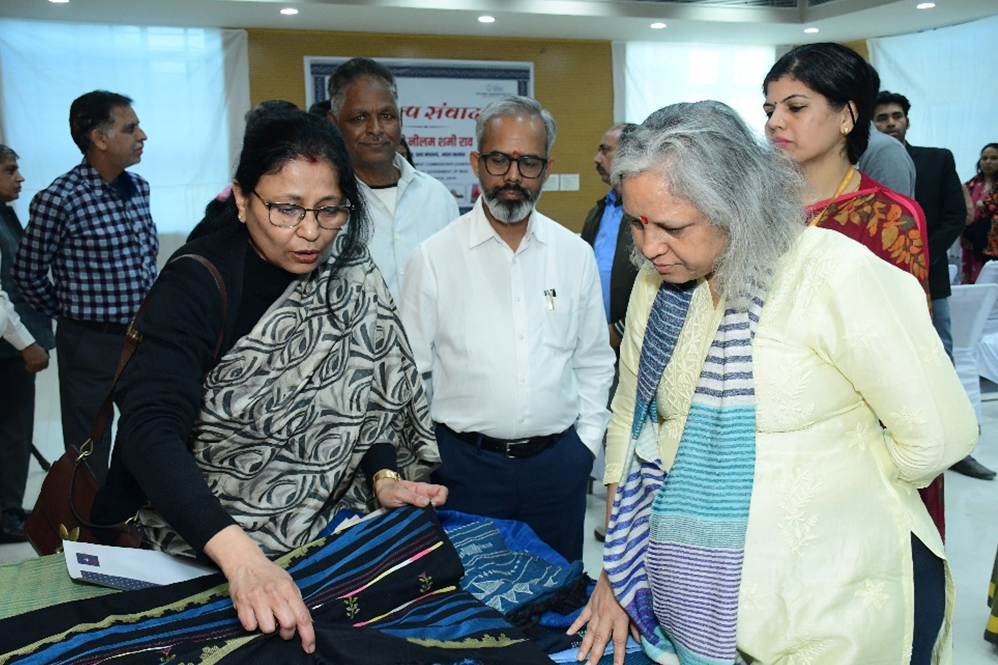
During her tour of the academic laboratories and workshops, Smt. Rao reviewed facilities, tools, and equipment essential for hands on training. Dr. Toolika Gupta, Director of IICD, presented an overview of the institute’s journey, achievements, and its role in shaping skilled craft professionals. The Secretary also interacted extensively with faculty members and students, discussing curriculum design, industry linkages, apprenticeship models, and the challenges of sustaining craft traditions while ensuring viable professional pathways.
Highlighting the importance of craft education, she emphasized that it serves as a bridge between India’s cultural heritage and contemporary livelihood opportunities. She observed a pressing national need to strengthen structured craft education. For the benefit of both students and artisans, she suggested that IICD be considered for sponsoring student exposure visits to craft clusters, enabling real world learning and deeper understanding of traditional practices.
An innovative startup initiative by IICD students focusing on developing fibre from chikan feathers received special appreciation. The project was noted for its potential in sustainability and innovation, with a recommendation for further research and replication.
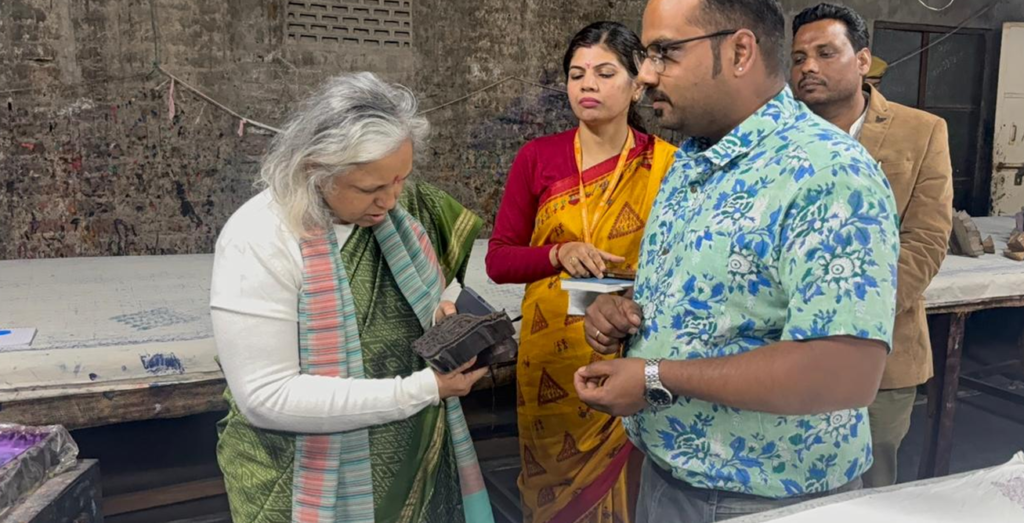
The visit then moved to the renowned Hand Block Print Cluster of Sanganer, Jaipur. The Secretary visited the block printing units of National Awardee Shri Kunj Bihari Sonava and master artisan Shri Naval Kishore Patel, both known for their expertise in hand block printing using natural dyes. She commended their efforts in preserving age old practices passed down through four generations.
Artisans explained that traditional printing blocks were earlier made from Gurjan wood, now replaced by Sagaun due to scarcity. These blocks, with an average lifespan exceeding a century, have a functional printing capacity of nearly 2,000 meters regardless of fabric type. A distinctive feature observed was the reinforcement of wooden blocks with brass, enhancing durability and enabling intricate motif detailing.
Hand block printed products from the cluster are exported to markets such as Japan and the United Kingdom. However, the need to strengthen export related services was strongly emphasized. Effective coordination among artisans, associations, export councils, and government bodies was identified as essential for scaling global reach. Artisans shared that a block printer typically prints four bedsheets a day, earning about ₹250 per piece, resulting in a monthly income of around ₹25,000.
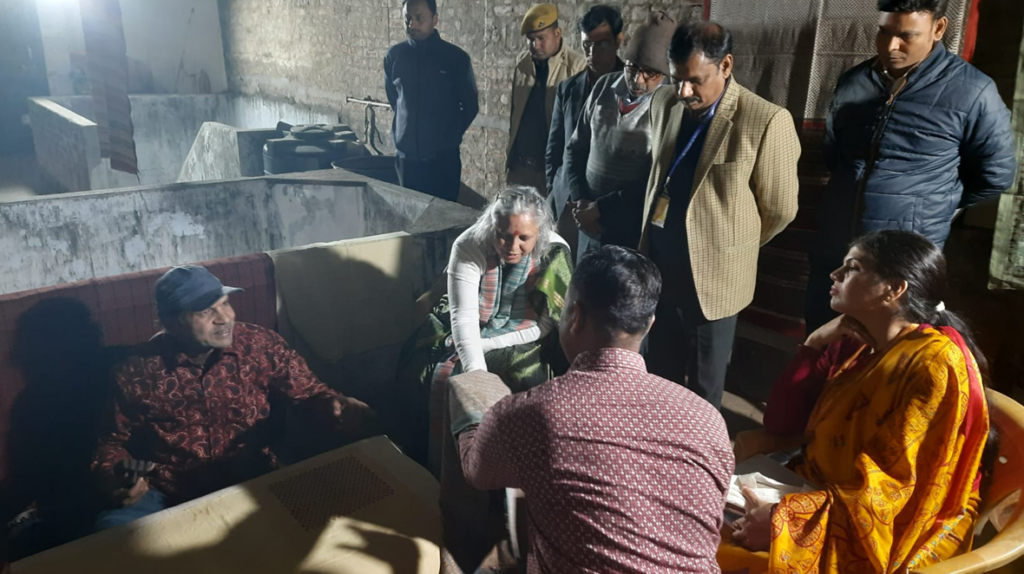
Environmental sustainability emerged as a key concern, particularly wastewater management and eco friendly dyeing practices. The Secretary also highlighted the need to improve water quality and mineral composition suitable for printing. She expressed concern over the gradual loss of traditional knowledge related to natural colour preparation using materials like harda, geru, natural gum, dhavde ka phool, aal, and alum. She noted that each stage of colour preparation, printing, and fixation involves deep chemical understanding, which must be documented and integrated into institutional training.
The visit reinforced that hand block printing is a collaborative craft involving designers, block makers, colour specialists, printers, dyers, and washers. To support innovation, the adoption of modern technologies such as 3D printing and computer aided block making was encouraged.
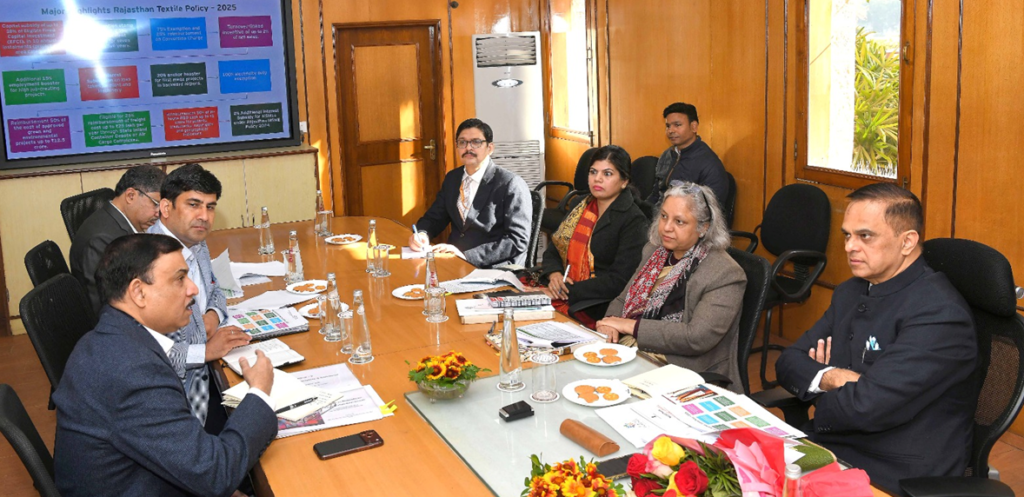
A high level meeting with Rajasthan Chief Secretary Shri V. Srinivas followed, focusing on the theme “Textiles in Rajasthan – Heritage to High Value Growth.” The Chief Secretary highlighted Bhilwara’s status as a major textile hub and the promotion of products from districts like Balotra, Kota, Pali, and Barmer under the One District One Product initiative.
The Rajasthan Textile and Apparel Policy 2025 was discussed as a transformative framework aimed at boosting exports, encouraging garment manufacturing, and supporting both traditional and modern sectors including handlooms, wool, technical textiles, leather, and footwear. Textile parks across Pali, Bhilwara, Jaipur, and Kishangarh were cited as key infrastructure supporting growth, even as Rajasthan remains a low cotton producing state.
Smt. Rao suggested extending support through the Central Silk Board for castor plantations to promote Eri silk production and highlighted milkweed, locally known as aak ka paudha, as another potential fibre source. She underscored the importance of Rajasthan’s wool sector, which plays a major role in India’s wool production and supports pastoral communities. Collaborative efforts between the Central Wool Development Board and Central Sheep and Wool Research Institute were encouraged, alongside development of wool based handicrafts.
She advocated channeling students of chemistry, textile engineering, and technical disciplines into handicrafts and textiles, calling for a complete revamp of ITI programs. Projects like Wool Mandi, handloom parks, and craft tourism villages received assurance of support to enhance artisan incomes.
At the Textile Committee’s Regional Office in Jaipur, the Secretary reviewed laboratory infrastructure, testing capabilities, and quality certification services. She inaugurated a new Light Fastness Testing Machine and inspected various sections. Discussions focused on administrative restructuring, equipment replacement policies, infrastructure expansion, performance monitoring, and strengthening cyber security protocols.
The visit continued to the Bagru Hand Block Printing Cluster, where Padma Shri awardee Shri Ram Kishore Chhipa demonstrated the complete Bagru printing process. Emphasis was laid on encouraging the next generation to study chemistry to deepen understanding of colour science and process efficiency. Constraints such as seasonal productivity loss during monsoons were discussed, with solutions like dryers and establishment of effluent treatment parks proposed to address environmental concerns.
Indigo dyeing processes were also reviewed, with suggestions to promote Bagru indigo products in international markets. The Secretary noted changes in block making materials due to Gurjan wood scarcity.
At the Titanwala Museum in Bagru, dedicated to preserving Bagru printing heritage, she appreciated the systematic documentation of tools, processes, and motifs. The museum’s ecological and educational model was suggested for replication across Common Facility Centres.
Visits to M/s Dilip Industries and the Handicrafts Service Centre in Jaipur highlighted innovation in handmade products and the pivotal role of awardee artisans. The Secretary emphasized that India’s craft sector represents 140 lakh skilled hands and stressed the importance of authenticity through the Handicraft Mark.
Directions were issued to transform Handicrafts Service Centres into knowledge hubs, strengthen collaborations with institutions like NIFT Jodhpur, expand weaver engagement, and enhance market access through platforms such as indiahandmade.com. A target of ₹5 lakh annual income per artisan was underscored as essential for sustainable livelihoods.
The Jaipur visit concluded as a powerful reaffirmation of the government’s commitment to preserving India’s craft heritage while steering it toward innovation, sustainability, and inclusive economic growth.





































Leave a Reply