
Introduction: The Impending Financial Squeeze for the Indian Consumer
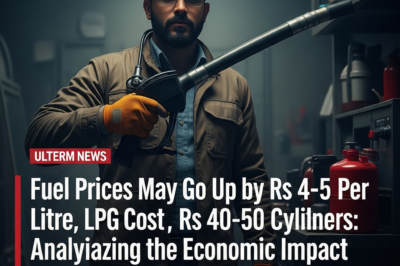
The Indian economy, currently navigating a complex post-pandemic recovery and geopolitical turbulence, is bracing for a significant shock as reports suggest a substantial hike in fuel and Liquefied Petroleum Gas (LPG) prices. According to recent reports cited by India Today and other major news outlets, petrol and diesel prices are expected to rise by as much as Rs 4 to 5 per litre, while the cost of a domestic LPG cylinder could see an upward revision of Rs 40 to 50. This news has sent ripples of concern through the middle-class and rural populations alike, as fuel prices are inextricably linked to the cost of living in India. Whether it is the commute to work, the transportation of essential food items, or the basic necessity of cooking a meal, the anticipated price hike threatens to disrupt household budgets and fuel inflationary pressures across the board. In this comprehensive analysis, we delve into the reasons behind these projected increases, the historical context of fuel pricing in India, and the long-term socio-economic implications for a nation that is heavily dependent on energy imports.
The Impending Price Hike: A Breakdown of Current Market Speculations
Sources close to the oil marketing companies (OMCs) have indicated that the current retail prices of petrol and diesel are not in alignment with the international benchmarks, primarily due to the volatility in global crude oil prices. For several months, despite fluctuations in the global market, domestic fuel prices remained relatively stagnant, leading to what economists call ‘under-recoveries’ for state-run oil companies like Indian Oil Corporation (IOC), Bharat Petroleum Corporation Limited (BPCL), and Hindustan Petroleum Corporation Limited (HPCL). The reported hike of Rs 4-5 per litre is seen as a necessary corrective measure to bridge the gap between procurement costs and retail selling prices. Similarly, the LPG sector is facing its own set of challenges. LPG is a subsidized commodity for many, and any increase in its price directly affects the kitchen budget of millions. A jump of Rs 40-50 per cylinder would represent one of the sharpest single-step increases in recent times, potentially reversing the gains made by various social welfare schemes aimed at providing clean cooking fuel to the underprivileged.
Understanding the Global Crude Oil Dynamics and Geopolitical Triggers
To understand why fuel prices in India are set to rise, one must look at the global landscape. India imports nearly 85% of its crude oil requirements, making it highly vulnerable to international market shifts. Recent tensions in the Middle East, particularly the ongoing conflicts that threaten shipping lanes in the Red Sea and the Strait of Hormuz, have added a ‘risk premium’ to oil prices. Furthermore, the decisions made by OPEC+ (the Organization of the Petroleum Exporting Countries and its allies) to continue production cuts have tightened global supply. When supply is constrained and demand remains steady or increases—as it has in the post-COVID industrial resurgence—prices naturally climb. Additionally, the strengthening of the US Dollar against the Indian Rupee has made imports even more expensive. Since oil is traded globally in Dollars, a weaker Rupee means that Indian OMCs have to shell out more local currency for the same volume of crude oil, a cost that is eventually passed down to the end consumer at the petrol pump.
The Economic Ripple Effect: How Fuel Inflation Impacts Essential Commodities
Fuel is not just a commodity; it is a fundamental input for almost every sector of the economy. A rise in diesel prices, in particular, is a precursor to across-the-board inflation. In India, the majority of freight—including food, clothing, and construction materials—is moved by road via diesel-powered trucks. When the cost of diesel increases by Rs 5 per litre, logistics companies are forced to hike their freight charges to maintain their margins. This leads to a direct increase in the retail price of vegetables, fruits, pulses, and milk. For the average Indian family, this means that even if they do not own a vehicle, their monthly expenditure will rise. This phenomenon is known as ‘cost-push inflation.’ Economists worry that if these fuel hikes are sustained, the Reserve Bank of India (RBI) might find it difficult to maintain its inflation targets, potentially leading to higher interest rates, which would further squeeze the purchasing power of consumers and the investment capacity of businesses.
The LPG Crisis: Impact on Domestic Budgets and the Ujjwala Scheme
The proposed hike of Rs 40-50 per LPG cylinder is particularly concerning for the success of the Pradhan Mantri Ujjwala Yojana (PMUY). This flagship scheme was designed to transition rural households away from traditional fuels like firewood and dung cakes to cleaner LPG. However, the recurring price hikes in LPG have often forced low-income families back to traditional, smoke-filled cooking methods, which pose significant health risks. For a middle-class urban household, an extra Rs 50 per month might seem manageable, but for a family living on the edge of the poverty line, it can mean the difference between a cooked meal and a cold one. The government faces a difficult choice: either increase the subsidy burden, which widens the fiscal deficit, or let the market prices prevail, which risks social and political backlash. The timing of such a hike is also critical, as it coincides with various regional elections and festive seasons where consumer spending is usually at its peak.
Government’s Balancing Act: Taxes, Subsidies, and the Role of OMCs
One of the most debated aspects of fuel pricing in India is the heavy taxation. A significant portion of the price a consumer pays at the pump consists of Central Excise Duty and State Value Added Tax (VAT). While the central government uses these taxes to fund infrastructure projects and social schemes, they also serve as a buffer that can be reduced to provide relief to the public. However, both central and state governments are often reluctant to cut these taxes due to their reliance on fuel revenue to balance their budgets. On the other hand, Oil Marketing Companies have been absorbing losses during periods of high international prices to prevent sudden domestic price spikes. The current projected hike suggests that the OMCs can no longer sustain these losses without risking their financial stability. The interplay between corporate health, government revenue, and public welfare is a delicate balance that the administration must navigate carefully in the coming weeks.
Looking Ahead: Strategic Solutions and the Shift Toward Renewable Energy
The recurring volatility of fuel prices serves as a stark reminder of India’s urgent need for energy security. While short-term measures like minor price hikes or temporary tax cuts provide immediate fixes, the long-term solution lies in diversifying the energy basket. The Indian government has already intensified its focus on ethanol blending, aiming to reach a 20% blend in petrol by 2025-26, which would reduce the volume of imported crude needed. Furthermore, the aggressive push for Electric Vehicles (EVs) in both the two-wheeler and four-wheeler segments is a strategic move to decouple personal mobility from global oil markets. Expanding the use of Compressed Natural Gas (CNG) and investing in Green Hydrogen are other pillars of this transition. However, these shifts take time. For the immediate future, the Indian public must prepare for a tighter financial environment as the reality of global energy dynamics manifests at the local petrol station and in the kitchen.
Conclusion: Navigating the New Normal of Energy Costs
In conclusion, the potential rise in petrol, diesel, and LPG prices is a multifaceted issue rooted in global geopolitics, currency fluctuations, and domestic fiscal policy. While a Rs 4-5 hike per litre or a Rs 50 increase per cylinder might seem like a incremental change, its cumulative effect on the Consumer Price Index and the overall quality of life cannot be understated. As the world transitions toward a more sustainable energy future, the transition period remains fraught with volatility. The Indian consumer, resilient as ever, will once again have to adapt to these shifting economic sands. The government’s role in the coming months will be crucial—not just in managing the immediate fallout of these price hikes, but in accelerating the structural changes necessary to shield the nation from the whims of the global oil market. For now, the nation watches the ticker closely, waiting to see how these projections translate into the everyday reality of their wallets.






































Leave a Reply