
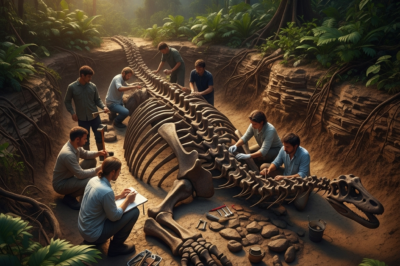
In a groundbreaking discovery that has sent ripples through the scientific community, paleontologists have officially unearthed the remains of Southeast Asia’s largest dinosaur. This monumental find, recently highlighted by reports in The Times of India, marks a significant milestone in our understanding of the prehistoric creatures that once roamed the eastern part of the Asian continent.
Unveiling the Prehistoric Colossus
The remains belong to a long-necked herbivore, a member of the titanosaur family, known for their immense size and heavy build. Unearthed during a multi-year excavation project, the fossils include massive limb bones and vertebrae that suggest the creature reached lengths and weights previously thought impossible for species in this specific region. Researchers state that the sheer scale of the femur and ribs indicates a beast that would have dwarfed other contemporary dinosaurs in the area. The preservation of the fossils allows for detailed analysis, giving scientists a rare glimpse into the biology of these ancient giants.
A Major Breakthrough for Southeast Asian Paleontology
This discovery does more than just break records; it provides vital data on the evolutionary history of sauropods. By studying the bone structure and the geological layers in which they were found, scientists can now piece together the migration patterns and environmental conditions of the Late Cretaceous period in Southeast Asia. This find suggests that the region was a lush, fertile corridor capable of supporting massive megafauna, challenging previous theories about the limitations of the local ecosystem during that era. It also highlights the importance of the region as a hotbed for future archaeological and paleontological exploration.
As excavation and research continue, the scientific community eagerly awaits further analysis of the site. This discovery not only adds a new chapter to the natural history of the Earth but also positions Southeast Asia as a critical hub for understanding global biodiversity in the age of dinosaurs. The preservation of these fossils offers a rare window into a lost world, reminding us of the incredible diversity that once flourished on our planet and the mysteries still buried beneath our feet.





































Leave a Reply