
In Shorts
- Government issues India’s first national counter-terror strategy named PRAHAAR.
- The policy focuses on prevention, coordinated response, and technology-driven threats.
- Framework urges collaboration across agencies and international partners.
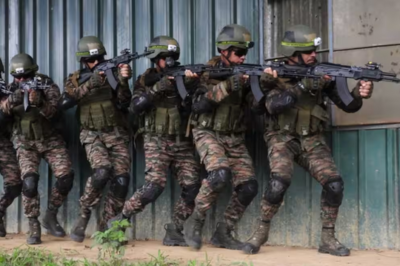
New Delhi India has formally launched its first ever national counter-terror policy and strategy known as PRAHAAR, a major policy milestone aimed at reshaping the country’s approach to terrorism in a rapidly changing security environment. The full policy document was released on February 23, 2026 by the Ministry of Home Affairs (MHA), outlining a structured doctrine that emphasises intelligence-led prevention, rapid response and strong inter-agency cooperation.
The eight-page framework sets out a holistic approach to counter-terror activities, aiming to prevent attacks before they occur, protect key infrastructure and enhance the legal and judicial handling of terror cases. It calls for coordinated action across central and state agencies and stresses respect for human rights and the rule of law throughout all operations.
PRAHAAR recognises that terror threats now span land, air, and sea domains and encompass traditional militancy as well as modern risks such as cyber-enabled radicalisation, encrypted online communication, and the misuse of drones and emerging technologies. According to the document, extremist groups are increasingly leveraging digital platforms for funding, recruitment and propaganda, presenting new challenges for security agencies.
An integral pillar of the policy is the prioritisation of intelligence gathering and real-time information sharing. The Multi-Agency Centre (MAC) and the Joint Task Force on Intelligence (JTFI) within the Intelligence Bureau will play central roles in this effort, serving as nodal platforms to synchronise counter-terror inputs among national and local agencies.
Beyond operational measures, the policy aims to reduce conditions that fuel radicalisation by promoting community engagement, socio-economic development programmes, and dialogues with civil society. It also underlines the need for comprehensive prosecution strategies, backed by legal experts at every stage of terror-related investigations.
Key sections of PRAHAAR highlight the importance of protecting critical sectors such as energy, transportation, ports, defence installations and space assets. Border security enhancements and advanced surveillance technologies are also central components, reflecting the doctrine’s emphasis on preemptive action and deterrence.
At the international level, the government has signalled its intent to strengthen partnerships for counter-terror cooperation, including intelligence sharing and extradition arrangements, to address transnational terror networks and financing channels.
Officials describe PRAHAAR as a forward-looking strategy that formalises practices long followed by security forces while adapting them to 21st century threats. It marks a shift from reactive responses to proactive deterrence, aligning India’s national security posture with global best practices and emerging geopolitical realities.



































Leave a Reply