
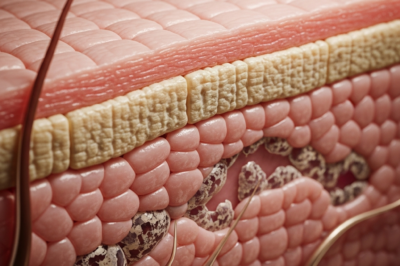
For decades, the global conversation surrounding sun safety has primarily focused on the immediate, visible effects of ultraviolet (UV) radiation: the painful redness of a sunburn, the peeling of damaged epidermis, and the short-term discomfort of heat exposure. However, a groundbreaking comprehensive study recently published in the European Medical Journal (EMJ) is fundamentally shifting our understanding of dermatological health. The report suggests that the most insidious forms of sun damage do not occur on the surface where we can see them, but rather deep within the sub-dermal layers of the skin, often beginning long before any visible signs appear. This ‘silent’ damage represents a ticking biological time bomb that challenges our current methods of prevention and diagnosis. As the climate shifts and UV intensity fluctuates globally, the medical community is sounding the alarm: your skin may be suffering significant structural degradation even if you never turn red. This article delves into the intricate science of subsurface sun damage, the findings of the EMJ, and what this means for the future of skin care and cancer prevention.
The Hidden Reality of Subcutaneous UV Radiation Penetration
To understand the EMJ’s findings, one must first understand the physics of light as it interacts with human tissue. Ultraviolet radiation is divided into three categories: UVA, UVB, and UVC. While UVC is mostly filtered by the Earth’s atmosphere, UVA and UVB reach our skin in varying proportions. Historically, UVB was considered the primary villain because it causes the immediate ‘burn’ on the surface (the epidermis). However, the EMJ report emphasizes that UVA rays, which have longer wavelengths, penetrate much deeper into the dermis. This subsurface penetration is where the most significant long-term damage occurs. The dermis is the skin’s structural engine, containing collagen, elastin, and the complex network of blood vessels that nourish the skin. When UVA rays reach this level, they generate reactive oxygen species (ROS), which trigger a cascade of oxidative stress. This process doesn’t just result in a temporary tan; it systematically dismantles the protein structures that keep skin firm and resilient. Because this happens beneath the surface, individuals often feel a false sense of security, assuming that the absence of a sunburn translates to an absence of damage. The EMJ research proves this is a dangerous misconception.
Key Insights from the European Medical Journal (EMJ) Report
The EMJ’s latest publication highlights a multi-year study involving multispectral imaging and deep-tissue biopsies. Their researchers found that even in subjects who practiced ‘standard’ sun protection, there were significant markers of DNA fragmentation in the lower layers of the epidermis and upper dermis. One of the most startling statistics in the report indicates that up to 80% of premature skin aging—including deep wrinkles and loss of elasticity—is attributable to this subsurface UV exposure that occurred years, if not decades, earlier. Furthermore, the EMJ highlights the role of ‘mitochondrial DNA damage.’ Mitochondria are the powerhouses of our cells, and when UV radiation reaches the deeper layers, it can damage the mitochondrial DNA in fibroblasts—the cells responsible for producing collagen. This leads to a state of ‘cellular senescence,’ where the cells stop functioning correctly but don’t die off, instead secreting inflammatory signals that further degrade the surrounding tissue. This cycle of subsurface degradation is a primary driver of chronic skin conditions and eventually, carcinogenesis.
The Long-Term Consequences: Beyond the Sunburn
The implications of damage starting below the surface are profound. When we talk about sun damage, we are really talking about a cumulative biological debt. The EMJ researchers point out that hyperpigmentation, often dismissed as ‘age spots’ or ‘liver spots,’ is actually the skin’s late-stage response to deep-seated trauma. Melanocytes, located at the base of the epidermis, overproduce melanin in a desperate attempt to shield the cell nuclei from further radiation. By the time these spots appear on the surface, the damage has been established for years. More critically, the report discusses the ‘latent period’ of skin cancer. Basal cell carcinoma and squamous cell carcinoma often stem from mutations in the stem cells located in the deeper layers of the hair follicles and the basement membrane. Because the damage starts so deep, it is often invisible to the naked eye during regular self-examinations until it reaches a critical mass. This underscores the necessity for more advanced diagnostic tools that can ‘see’ through the top layer of skin to assess the health of the underlying tissue.
Modern Diagnostic Tools for Subsurface Detection
In light of these findings, the EMJ advocates for a shift in how dermatologists perform screenings. Traditional visual inspections are no longer sufficient to gauge the true extent of a patient’s UV exposure. The report points to the success of technologies like Confocal Laser Scanning Microscopy (CLSM) and Optical Coherence Tomography (OCT). These non-invasive imaging techniques allow doctors to view live tissue at a cellular resolution several millimeters below the surface. By using these tools, clinicians can identify ‘solar elastosis’—the accumulation of abnormal elastic tissue—long before it manifests as sagging skin or wrinkles. Another emerging tool is UV fluorescence photography, which can reveal existing subsurface pigment that has not yet reached the surface. The EMJ emphasizes that if patients could see the ‘invisible’ damage hiding beneath their skin, they would be far more likely to adhere to rigorous sun protection protocols. The goal is to move from reactive treatment to proactive, subsurface preservation.
Preventative Strategies in a Changing Climate
If the damage starts below the surface, our protection must also be deep-reaching. The EMJ report suggests that many consumers rely on SPF (Sun Protection Factor) ratings that only measure UVB protection, leaving them vulnerable to the deeper-penetrating UVA rays. To combat this, the medical community is pushing for more widespread adoption of the ‘PA’ rating system, which specifically measures UVA protection. Additionally, the role of topical and systemic antioxidants is becoming a cornerstone of preventative care. Vitamins C and E, ferulic acid, and niacinamide can help neutralize the reactive oxygen species generated in the dermis before they can damage DNA. Furthermore, the report discusses the importance of ‘biological filters’—ingredients that do not just sit on top of the skin but help bolster the skin’s natural repair mechanisms. Clothing is also highlighted; the EMJ notes that standard summer fabrics often have an Ultraviolet Protection Factor (UPF) of only 5, allowing significant subsurface penetration. Switching to dedicated UPF 50+ clothing is one of the most effective ways to prevent deep-tissue degradation.
The Future of Dermatological Research and Conclusion
The findings published in the European Medical Journal serve as a pivotal moment for dermatology. As we look toward the future, research is shifting toward ‘DNA repair enzymes’—topical treatments that aim to locate and fix UV-induced mutations before they lead to cancer. We are also seeing a rise in personalized sun care, where an individual’s genetic predisposition to UV damage can be mapped to create a custom protection plan. In conclusion, the revelation that sun damage starts below the surface is a call to action for everyone. We must look past the surface of our skin and recognize the complex, invisible biological processes occurring every time we step into the light. Protecting the skin’s surface is merely the first step; the real battle for long-term health is fought in the deeper layers of the dermis. By adopting broad-spectrum protection, utilizing advanced imaging, and understanding the cumulative nature of UV exposure, we can better protect ourselves from the hidden dangers of the sun and ensure the health of our skin for decades to come.







































Leave a Reply