
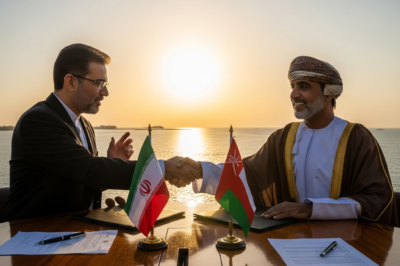
In a move that could fundamentally alter the economics of global maritime trade, a sensational new report has emerged regarding a proposed two-week ceasefire plan in the Middle East. According to reports sourced by India Today, a diplomatic proposal is on the table that would allow Iran and Oman to levy transit fees on vessels passing through the Strait of Hormuz. This development marks a significant shift in regional dynamics, moving from purely military tensions to a framework that involves economic leverage over one of the world’s most critical chokepoints.
The Strait of Hormuz, a narrow waterway between the Persian Gulf and the Gulf of Oman, is the world’s most important oil transit point. Approximately one-fifth of the world’s total oil consumption passes through this strait daily. The introduction of a transit fee, even under the guise of a temporary ceasefire agreement, represents a precedent-setting shift in how international waters are managed in conflict zones.
The Proposed Ceasefire: A Bridge to Stability or a Toll on Trade?
The reported plan centers on a 14-day cessation of hostilities, intended to provide a “cooling-off” period amidst escalating regional tensions. The most controversial aspect of this diplomatic roadmap is the provision allowing Tehran and Muscat to collect fees from commercial shipping. While the specific details regarding the fee structure and the mechanism for collection remain opaque, the move is seen as an attempt to provide Iran with an economic incentive to maintain peace and ensure the safety of the passage.
Diplomatic sources suggest that Oman, which has historically maintained a neutral stance and often serves as a mediator between Iran and the West, would play a dual role in this arrangement. Not only would it benefit from the transit fees, but it would also likely act as a watchdog to ensure that the revenues are generated and handled within the agreed-upon ceasefire parameters. For Iran, the ability to legally levy fees on international shipping could provide a much-needed influx of foreign currency, though it is expected to face significant pushback from global powers and shipping conglomerates.
Impact on Global Energy Markets and International Law
The potential implementation of a transit fee in the Strait of Hormuz has sent ripples through the global energy sector. If shipping companies are forced to pay a “stability tax” to pass through the strait, these costs will inevitably be passed down to consumers, potentially driving up the price of crude oil and liquefied natural gas (LNG). For nations like India, which relies heavily on energy imports from the Persian Gulf, any additional cost at this chokepoint could have a direct impact on domestic fuel prices and inflation.
Furthermore, the proposal raises complex questions regarding international maritime law, specifically the United Nations Convention on the Law of the Sea (UNCLOS). Under current international norms, the Strait of Hormuz is recognized as an international waterway where ships enjoy the right of “transit passage.” Imposing a fee for such passage could be seen as a violation of these long-standing principles, leading to concerns that other nations might attempt to monetize strategic waterways elsewhere in the world.
- Shipping Costs: Increased insurance premiums combined with new transit fees could make the route significantly more expensive.
- Geopolitical Precedent: This move could redefine the concept of “sovereign control” over international straits.
- Energy Security: Diversification of trade routes might become a priority for major oil-importing nations.
A Fragile Window for Diplomacy
While the two-week ceasefire plan offers a glimmer of hope for de-escalation, it remains highly fragile. The proposal requires the consensus of not just the regional players, but also the silent approval of major powers like the United States and China, both of whom have a vested interest in the free flow of commerce through the region. Critics argue that allowing a “toll” on the Strait of Hormuz effectively rewards brinkmanship, while proponents see it as a pragmatic, if unconventional, way to prevent a wider regional war.
As the international community watches closely, the next few days will be crucial in determining whether this report translates into a formal agreement. If successful, the two-week experiment could either pave the way for a more permanent peace or set the stage for a new era of maritime economic warfare. For now, the global shipping industry remains on high alert, navigating the thin line between diplomatic breakthroughs and economic volatility.





































Leave a Reply