
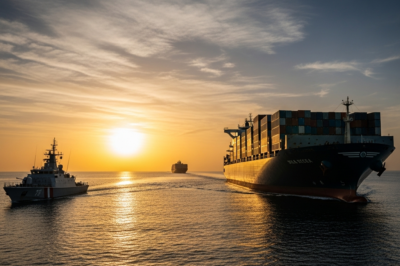
The geopolitical landscape of the Middle East has long been defined by the volatile nature of its maritime corridors, but none are as vital to the global economy as the Strait of Hormuz. In a significant development that has captured the attention of world leaders, energy markets, and defense analysts alike, Iran has officially announced that the Strait of Hormuz will remain “completely open” during the current ceasefire period. This declaration, initially reported by NDTV and other major news outlets, marks a potentially transformative moment in the ongoing tensions that have gripped the Persian Gulf for years. As the world watches the implementation of various regional truces, Tehran’s commitment to maintaining the flow of traffic through this 21-mile-wide chokepoint suggests a calculated shift in diplomatic strategy. The announcement is not merely a logistical update but a powerful signal of intent, aimed at de-escalating pressure while asserting Iran’s sovereign control over one of the world’s most critical maritime arteries. For decades, the threat of closing the Strait has been used as a tool of deterrence, making this pledge of openness a vital development for global energy security and international trade stability.
The Strategic Significance of the Strait of Hormuz
To understand the magnitude of Iran’s announcement, one must first grasp the sheer scale of the Strait of Hormuz’s importance. Located between Oman and Iran, the waterway connects the Persian Gulf with the Gulf of Oman and the Arabian Sea. It is the primary route for petroleum exports from the world’s leading producers, including Saudi Arabia, Kuwait, Iraq, the United Arab Emirates, and Iran itself. According to data from the U.S. Energy Information Administration (EIA), approximately one-fifth of the world’s total oil consumption passes through this narrow passage every single day. This equates to nearly 21 million barrels of crude oil and refined products. Furthermore, the Strait is a critical conduit for Liquefied Natural Gas (LNG), particularly from Qatar, the world’s largest LNG exporter. Any disruption here does not just affect the immediate neighbors; it triggers a domino effect that impacts gas prices in the United States, industrial production in Germany, and energy security in China and Japan. By declaring the Strait “completely open,” Iran is effectively lowering the risk premium on global oil prices, which often spike at the mere hint of regional instability.
Analyzing the “Completely Open” Declaration
Iran’s big announcement comes at a time when the Middle East is navigating a complex web of ceasefires and diplomatic maneuvers. The terminology used by Iranian officials—asserting that the passage is “completely open”—is designed to provide a sense of normalcy in an otherwise heightened security environment. This move is widely seen as an attempt to project the image of a responsible regional power that prioritizes global economic stability, despite its ongoing friction with Western powers. From an SEO and journalistic perspective, the timing is impeccable. By aligning this announcement with a ceasefire, Iran is capitalizing on the narrative of de-escalation. However, analysts remain cautious. The “openness” of the Strait is often contingent upon the perceived security of Iranian interests. By making this public commitment, Tehran is also placing the onus on other international actors, such as the United States and its allies, to maintain a similar level of restraint. The statement serves as both a reassurance to trade partners and a tactical maneuver to reduce the presence of foreign naval armadas that often patrol these waters under the guise of protecting commercial shipping.
Historical Context: The Legacy of the Tanker War and Modern Threats
The history of the Strait of Hormuz is fraught with conflict, most notably during the “Tanker War” of the 1980s. During the Iran-Iraq War, both nations targeted each other’s oil exports in a bid to cripple their opponent’s economy. This period saw the deployment of mines, missile attacks on commercial vessels, and eventually the direct involvement of the U.S. Navy to escort tankers. Fast forward to the modern era, and the Strait has remained a flashpoint. In 2019 and 2021, a series of incidents involving seized tankers and suspected mine attacks brought the region to the brink of open warfare. Iran has, on multiple occasions, threatened to close the Strait if its own oil exports were completely blocked by international sanctions. Therefore, the current announcement that the waterway is “completely open” is a significant departure from the bellicose rhetoric of the past. It reflects a strategic calculation that, for now, regional stability serves Iran’s interests better than chaos. This historical backdrop makes the current ceasefire-driven openness even more noteworthy, as it represents a rare moment of predictability in a historically unpredictable region.
The Role of the Ceasefire in Reshaping Regional Diplomacy
The announcement cannot be viewed in isolation from the broader geopolitical shifts occurring in the Middle East. Whether the ceasefire pertains to the conflicts in Yemen, the tensions involving Hezbollah in Lebanon, or the broader Israel-Hamas war, the common thread is a temporary cessation of hostilities that allows for diplomatic breathing room. Iran’s decision to keep the Strait of Hormuz open is an integral part of this diplomatic puzzle. It suggests that Tehran is willing to use its leverage over the waterway as a “carrot” rather than a “stick” during negotiations. By ensuring the safe passage of vessels, Iran facilitates a climate where regional deals can be brokered without the immediate threat of a global energy crisis. This development also highlights the role of intermediaries, such as Oman and Qatar, who have been working tirelessly to bridge the gap between Tehran and the West. A functional, open Strait is a prerequisite for any long-term peace framework in the region, as it provides the economic foundation upon which diplomatic trust can be built.
Global Economic Implications: Oil Markets and Shipping Insurance
The immediate beneficiary of Iran’s announcement is the global shipping industry. For months, ship owners and insurers have been on high alert, with insurance premiums for vessels traversing the Persian Gulf reaching record highs due to “war risk” surcharges. A “completely open” Strait, backed by a credible ceasefire, allows these costs to stabilize. For consumers, this could eventually translate to lower costs at the pump, as the geopolitical risk premium currently baked into oil prices begins to dissipate. Furthermore, the announcement provides much-needed certainty for the major Asian economies—China, India, Japan, and South Korea—that are the primary destinations for oil passing through the Strait. These nations have historically maintained a delicate balancing act, maintaining ties with both Iran and the Arab Gulf states. An open Strait reduces the pressure on these nations to choose sides and ensures that their energy-hungry industries continue to function without interruption. However, the economic impact is not just about oil; the Strait is also a vital route for general cargo, and its stability is essential for the global supply chains that have already been battered by the events of the past few years.
Naval Presence and the Future of Maritime Security
Despite the positive news of an open Strait, the presence of international naval forces in the region remains a point of contention. The United States, through its Fifth Fleet based in Bahrain, has long maintained a robust presence to ensure the freedom of navigation. Iran, conversely, views the presence of foreign navies as a provocative and destabilizing factor. The announcement that the Strait is open during the ceasefire might be an attempt by Tehran to argue that foreign intervention is unnecessary. If Iran can demonstrate that it can regulate the waterway peacefully and effectively, it strengthens its argument for a regional security architecture that excludes Western powers. On the other hand, the international community is likely to remain vigilant. The transition from “open” to “closed” can happen in a matter of hours in the event of a diplomatic breakdown. Therefore, while the current announcement is a welcome relief, it also underscores the fragile nature of maritime security in the 21st century, where a single narrow passage holds the power to dictate the economic fortunes of the entire planet.
Conclusion: A Fragile Peace on the Horizon?
In conclusion, Iran’s announcement that the Strait of Hormuz will remain “completely open” during the ceasefire is a landmark development that offers a glimmer of hope for regional and global stability. By de-escalating the rhetoric surrounding this critical chokepoint, Tehran has provided the international community with a window of opportunity to pursue deeper diplomatic engagement. However, the world must remain cognizant of the fact that this openness is tied to the longevity of the ceasefire and the broader political climate. The Strait of Hormuz remains a barometer for Middle Eastern tensions; when it is open and calm, the world breathes easier, but when it is threatened, the global economy shudders. As we move forward, the challenge will be to transform this temporary state of openness into a permanent feature of international maritime law, ensuring that the world’s energy lifelines are never again used as pawns in geopolitical chess. For now, the “completely open” status of the Strait serves as a vital reminder of the power of diplomacy over confrontation and the shared global interest in maintaining the free flow of commerce across the high seas.



































Leave a Reply