
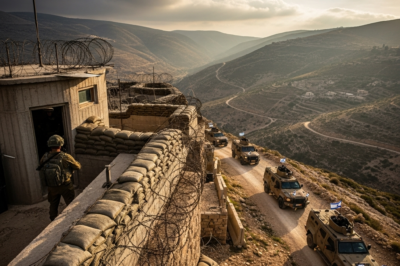
The geopolitical landscape of the Middle East has entered a harrowing new phase as reports emerge that the Israeli Defense Forces (IDF) are significantly entrenching their positions within Southern Lebanon. This development, confirmed by recent intelligence and reports from Reuters, signals a shift from what was initially described as limited, localized raids into a more permanent and fortified military presence. As the sound of heavy machinery and the construction of tactical supply routes echo through the rugged hills of the border region, the international community is watching with bated breath. In a parallel effort to prevent a full-scale regional conflagration, the United States has announced it will host high-level talks this coming Thursday, aiming to broker a fragile peace or at the very least, a temporary cessation of hostilities that have already displaced hundreds of thousands on both sides of the Blue Line.
The current escalation is not merely a tactical maneuver; it represents a fundamental change in Israel’s northern strategy. For months, the border between Israel and Lebanon has been a theater of attrition, characterized by cross-border rocket fire from Hezbollah and precision airstrikes by the IDF. However, the move toward entrenchment suggests that the Israeli security cabinet has decided that a physical buffer zone is the only viable method to ensure the safety of its northern communities. This deepening presence involves the establishment of forward operating bases, the clearing of dense vegetation that provided cover for militants, and the deployment of advanced surveillance technology. The implications of this are profound, as it challenges the sovereignty of the Lebanese state and pushes the decade-old UN Resolution 1701 to its absolute breaking point.
The Military Reality: From Raids to Fortifications
In the initial weeks of the ground operation, the IDF characterized its moves as targeted incursions designed to dismantle Hezbollah’s infrastructure—specifically tunnels and weapon caches situated in close proximity to Israeli border towns. However, the narrative has shifted as military observers note the arrival of heavy engineering equipment and the fortification of strategic heights within Lebanese territory. These heights offer a commanding view of the Litani River and the surrounding valleys, providing a tactical advantage that is difficult to relinquish once secured. The entrenchment involves not just soldiers in trenches, but a sophisticated logistics network designed to sustain a long-term presence. This includes the hardening of communication lines and the creation of defensive perimeters that can withstand heavy rocket and anti-tank missile fire.
Military analysts suggest that by entrenching in Southern Lebanon, Israel is attempting to create a ‘security belt’ reminiscent of the one maintained between 1985 and 2000. While the Israeli government has not officially declared an intent to stay indefinitely, the physical reality on the ground—roads being paved, concrete barriers being placed, and permanent surveillance masts being erected—speaks to a longer timeline than previously admitted. Hezbollah, for its part, has responded with intensified guerrilla tactics, utilizing its knowledge of the local terrain to harass Israeli supply lines. The result is a high-intensity conflict where both sides are digging in, literally and figuratively, creating a stalemate that threatens to drain the resources and morale of all involved parties.
The Humanitarian Toll and a Growing Displacement Crisis
Behind the strategic maps and military jargon lies a human catastrophe of staggering proportions. The entrenchment of Israeli forces has forced a mass exodus of Lebanese civilians from southern villages that have now become active combat zones. Estimates suggest that over a million people in Lebanon have been displaced since the escalation began, with many seeking refuge in overcrowded shelters in Beirut or the northern regions. The infrastructure in these areas is buckling under the pressure, with shortages of clean water, medical supplies, and adequate housing. Entire villages have been reduced to rubble, and the agricultural heartland of the south—essential for Lebanon’s struggling economy—has been turned into a scorched-earth zone of military operations.
On the Israeli side, the situation is similarly dire for those living near the border. Tens of thousands of residents from towns like Kiryat Shmona and Metula remain displaced in hotels and temporary housing, unable to return to their homes due to the constant threat of Hezbollah’s arsenal. The economic cost for Israel is also mounting, as the mobilization of reserves and the stalling of northern industries put a strain on the national budget. The humanitarian dimension of this conflict is becoming a focal point for international NGOs, who warn that without a significant diplomatic breakthrough, the region faces a lost generation of children whose lives have been upended by a war that seems to have no clear exit strategy.
Diplomatic Maneuvers: The High-Stakes Talks in Washington
Against this backdrop of escalating violence, the United States is moving to exert its diplomatic influence. The announcement that Washington will host talks this Thursday is seen as a critical, perhaps final, attempt by the current administration to prevent the conflict from spiraling into an all-out regional war involving Iran and other proxies. These talks are expected to include high-ranking officials from across the Middle East, as well as European partners who have a vested interest in Lebanese stability. The primary goal of the US mediators is to negotiate a framework that honors the spirit of UN Resolution 1701 while addressing the modern security realities that have rendered the original agreement largely ineffective in recent years.
The challenges facing these talks are monumental. Israel is demanding a complete withdrawal of Hezbollah forces to the north of the Litani River and a mechanism to ensure they do not return. Hezbollah, meanwhile, maintains that its resistance is tied to the broader regional conflict and has shown little inclination to retreat while Israeli troops occupy Lebanese soil. The Lebanese government, caught in the middle, lacks the military power to enforce its will on Hezbollah and the political capital to demand an unconditional Israeli withdrawal. The US role will be to find a middle ground—perhaps a revamped international monitoring force with a stronger mandate or a staged withdrawal plan that provides security guarantees for both sides. However, with domestic political pressures in both Israel and the US, the window for a diplomatic masterstroke is narrowing rapidly.
Regional Implications: Iran, Hezbollah, and the Axis of Resistance
The entrenchment in South Lebanon does not occur in a vacuum; it is a central piece of the larger puzzle involving Iran’s ‘Axis of Resistance.’ Tehran has long viewed Hezbollah as its most potent forward-deployed asset, a deterrent against a direct strike on Iranian nuclear facilities. As Israel seeks to degrade this asset, the risk of direct Iranian involvement increases. We have already seen long-range missile exchanges between the two nations, and a prolonged Israeli occupation of Southern Lebanon could serve as a rallying cry for other Iranian-backed militias in Iraq, Syria, and Yemen to intensify their attacks. The fear among regional experts is that a ‘war of attrition’ in Lebanon could serve as the spark for a much larger, multi-front conflict that would devastate the global economy and security architecture.
Furthermore, the conflict is reshaping the internal politics of Lebanon. While there is a segment of the population that blames Hezbollah for dragging the country into a war it cannot afford, the Israeli entrenchment is also fueling a nationalist backlash. Even those who oppose Hezbollah’s ideology find it difficult to support a foreign military presence on their land. This dynamic complicates the efforts of the Lebanese Armed Forces (LAF) and the civilian government to assert control. If the talks on Thursday fail to provide a path toward sovereignty, the internal divisions within Lebanon could lead to a total state collapse, creating a power vacuum that would be even more dangerous for Israel and the wider region.
Strategic Objectives: What Does Israel Truly Want?
To understand the current situation, one must analyze the strategic objectives of the Netanyahu government. Officially, the goal is ‘security and the return of residents to the north.’ However, the depth and nature of the entrenchment suggest secondary objectives. Some analysts believe Israel is seeking to create a permanent buffer zone that it can use as a bargaining chip in future negotiations. Others argue that the goal is the systematic destruction of Hezbollah’s tunnel network and rocket sites, a task that requires months of ground control rather than days of raids. There is also the political dimension: a prolonged military success in the north could bolster a government that has faced significant domestic criticism over the events of October 7 and the ongoing war in Gaza.
However, the risks of this strategy are immense. History shows that occupying Lebanese territory often leads to a quagmire. The 1982 invasion, which aimed to expel the PLO, eventually led to the rise of Hezbollah and a bloody 18-year occupation that ended in a unilateral Israeli withdrawal in 2000. Today’s Hezbollah is far more sophisticated, better armed, and more deeply integrated into the local population than the militants of the 1980s. The IDF faces the prospect of a high-tech insurgency where their superior airpower and armor are mitigated by the dense urban and mountainous terrain. The question remains: can Israel achieve a lasting security victory through physical presence, or is it merely repeating the mistakes of the past on a much more dangerous scale?
The Road Ahead: De-escalation or Forever War?
As the delegates prepare for the Thursday talks in the United States, the world is at a crossroads. One path leads to a managed de-escalation, where international pressure and diplomatic ingenuity create a new security arrangement that allows for the withdrawal of Israeli forces and the distancing of Hezbollah from the border. This would require significant concessions from all parties and a massive international commitment to rebuilding Lebanon. The other path leads to a ‘forever war’—a localized but intense conflict that drains the lifeblood of Lebanon and Israel alike, periodically flaring up into regional crises. The entrenchment of the IDF suggests that Israel is preparing for the latter, even as it signals its willingness to engage in the former.
In conclusion, the situation in Southern Lebanon is a stark reminder of the volatility of the Middle East. The move from raids to entrenchment is a significant escalation that changes the calculus for every actor in the region. The upcoming talks in Washington represent a glimmer of hope, but they face a mountain of distrust and a reality on the ground that is changing with every shovel of dirt and every brick of concrete laid by the IDF. The coming days will determine whether the region can find a way back from the brink or if it is destined for a protracted struggle that will reshape the map of the Middle East for generations to come. The eyes of the world are now on the diplomatic corridors of Washington and the blood-stained hills of Southern Lebanon.



































Leave a Reply