
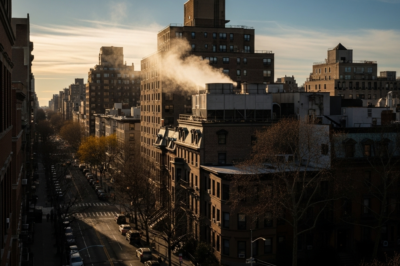
The New York City Department of Health and Mental Hygiene has launched a comprehensive investigation following the discovery of a cluster of Legionnaires’ disease cases in the affluent Upper East Side neighborhood of Manhattan. This developing situation has sent ripples of concern through one of the city’s most densely populated residential areas, prompting health officials to issue urgent guidance for residents and building managers alike. Legionnaires’ disease, a severe and often life-threatening form of pneumonia caused by the Legionella bacteria, is not a new visitor to the five boroughs, yet every new cluster serves as a stark reminder of the complexities involved in maintaining the safety of urban water systems. The current outbreak, centered primarily around the Lenox Hill area, has officials racing against time to identify the environmental source of the bacteria, which typically thrives in man-made water systems such as cooling towers, hot tubs, and large-scale plumbing networks. For residents of the Upper East Side, the news is a call for vigilance, particularly for those with underlying health conditions or advanced age, who are most susceptible to the devastating effects of this respiratory pathogen. This investigation is not merely a local concern but a significant public health event that underscores the ongoing battle against waterborne illnesses in modern infrastructure.
The Current Situation: Tracking the Upper East Side Cluster
As of the latest reports, several individuals residing in or frequenting the Upper East Side have tested positive for Legionnaires’ disease. The New York City Health Department is currently mapping these cases to identify a common environmental link, a process that involves detailed patient interviews and environmental sampling. Initial findings suggest that the cases are localized, but the nature of Legionella means the source could be a single cooling tower or a more systemic issue within a specific building’s water supply. Health officials have emphasized that the risk to the general public remains relatively low, as the disease is not spread through person-to-person contact. Instead, infection occurs when individuals breathe in small droplets of water (mists) or accidentally swallow water containing the bacteria into the lungs. The department’s rapid response team is currently inspecting cooling towers in the vicinity, looking for signs of inadequate maintenance or chemical treatment failures. In New York City, cooling towers are a primary suspect in such outbreaks due to their function of heat rejection, which often creates the warm, moist environment Legionella bacteria need to proliferate. Residents are being advised to monitor themselves for symptoms such as high fever, chills, muscle aches, and a persistent cough, and to seek medical attention immediately if they develop respiratory distress.
Understanding the Enemy: The Pathophysiology of Legionella
Legionella pneumophila is the species of bacteria responsible for the vast majority of Legionnaires’ disease cases. These bacteria are naturally occurring in freshwater environments like lakes and streams but become a significant health hazard when they enter and multiply in complex, man-made water systems. The process of infection is fascinating yet terrifying: once the bacteria enter the lungs through inhalation of contaminated aerosols, they are engulfed by alveolar macrophages, the very immune cells meant to protect the body. Rather than being destroyed, the Legionella bacteria hijack the macrophage’s internal machinery, creating a specialized vacuole where they can safely replicate. This intracellular lifestyle allows the bacteria to evade the host’s immune response and continue to multiply until the macrophage eventually bursts, releasing a new generation of bacteria to infect surrounding tissue. This cycle leads to severe inflammation, fluid accumulation in the lungs, and systemic symptoms. Beyond the severe pneumonia known as Legionnaires’ disease, the bacteria can also cause a milder, flu-like illness called Pontiac fever. While Pontiac fever usually resolves without treatment, Legionnaires’ disease requires aggressive antibiotic therapy and often hospitalization, particularly for the elderly, smokers, and individuals with chronic lung disease or weakened immune systems.
A History of Outbreaks: Lessons from New York’s Past
New York City has a long and difficult history with Legionnaires’ disease, which has significantly shaped the city’s current health regulations. One of the most devastating outbreaks occurred in the South Bronx in 2015, which resulted in 12 deaths and more than 120 illnesses. That tragedy was traced back to a contaminated cooling tower at an Opera House Hotel and served as a massive wake-up call for city legislators. In response, New York City implemented Local Law 77, some of the strictest regulations in the nation regarding cooling tower maintenance, registration, and testing. These laws require building owners to register their towers with the city, perform regular inspections, and conduct quarterly testing for Legionella. Despite these stringent measures, outbreaks continue to occur, highlighting the difficulty of maintaining 100% compliance across thousands of buildings. The current Upper East Side situation is a test of these systems. It raises questions about whether existing protocols are sufficient or if aging infrastructure in some of the city’s oldest and most prestigious neighborhoods requires even more specialized oversight. Historically, the disease was first identified in 1976 during a convention of the American Legion in Philadelphia, where 29 people died, leading to the naming of the disease and a new era of environmental microbiology.
Infrastructure Challenges in the Modern Urban Environment
The persistence of Legionnaires’ disease in a city like New York is inextricably linked to its infrastructure. Manhattan’s Upper East Side is characterized by a mix of historic pre-war buildings and modern high-rises, both of which present unique challenges for water management. Older buildings often have complex plumbing layouts with ‘dead legs’—sections of pipe where water can stagnate, providing a perfect breeding ground for biofilm and Legionella. Furthermore, as the climate warms, the city’s water supply enters buildings at higher temperatures, reducing the effectiveness of traditional cold-water cooling methods and encouraging bacterial growth. Modern buildings, while having more advanced systems, often rely on extensive cooling tower networks that, if not chemically treated with precision, can become aerosolizing engines for pathogens. The role of ‘biofilms’ cannot be understated; these are slimy layers of microorganisms that stick to the insides of pipes and tanks, protecting Legionella from chlorine and other disinfectants. Removing these biofilms requires mechanical cleaning and high-dose chemical ‘shocks,’ a process that is both expensive and disruptive. The Upper East Side investigation will likely look into the maintenance logs of every major building in the affected area to see if any lapses occurred during the recent transition into the warmer months.
Symptoms, Diagnosis, and the Importance of Early Intervention
One of the most critical aspects of managing a Legionnaires’ outbreak is public education regarding symptoms. Because the symptoms of Legionnaires’ disease closely mimic those of other types of pneumonia or even severe influenza, it is often misdiagnosed in its early stages. Patients typically experience a high fever (often above 104 degrees Fahrenheit), chills, a dry or productive cough, and shortness of breath. Many patients also report gastrointestinal symptoms like nausea, vomiting, and diarrhea, which can sometimes lead doctors away from a respiratory diagnosis. As the disease progresses, confusion or other mental changes may occur. For the medical community, the gold standard for diagnosis is a urinary antigen test, which is fast and non-invasive, or a culture of respiratory secretions. Early diagnosis is life-saving; when treated promptly with antibiotics like macrolides or fluoroquinolones, the prognosis for many patients is good. However, delays in treatment can lead to respiratory failure, septic shock, and multi-organ failure. The New York City Health Department has alerted local hospitals and clinics to increase their index of suspicion for Legionnaires’ disease in patients coming from the Upper East Side, ensuring that the right tests are ordered immediately.
The Future of Water Safety and Regulatory Evolution
As the investigation on the Upper East Side continues, it serves as a catalyst for a broader conversation about the future of public health and urban planning. Experts suggest that we may need to move beyond reactive testing of cooling towers and toward a more proactive, ‘holistic’ water management approach for entire buildings. This includes the implementation of Water Management Plans (WMPs) as recommended by the CDC and ASHRAE Standard 188. These plans involve identifying ‘control points’ in a building’s water system where Legionella growth is likely and monitoring those points constantly. Additionally, there is a growing interest in new technologies, such as automated secondary disinfection systems that can inject precise amounts of copper-silver ionization or chlorine dioxide into a building’s internal plumbing. As urban populations grow and infrastructure ages, the threat of waterborne pathogens will only increase. The Upper East Side cluster is a localized crisis, but its implications are global. Public health officials are now looking at the potential impact of water conservation efforts—such as low-flow fixtures—which can inadvertently lead to water stagnation and lower temperatures in hot water lines, further complicating the fight against Legionella. The outcome of the NYC DOH investigation will likely lead to updated recommendations for building managers across the city, reinforcing the idea that clean water is not just about what comes out of the tap, but how it is managed throughout the entire architectural ecosystem.






































Leave a Reply