
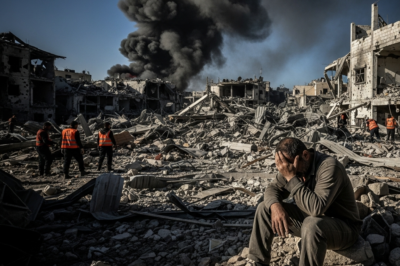
The Middle East, or West Asia as it is increasingly referred to in geopolitical circles, finds itself on the precipice of an all-out regional conflagration. In the latest tragic development of a conflict that shows no signs of abating, the Lebanese Health Ministry has reported that Israeli airstrikes have claimed the lives of at least 47 individuals in a single day of intensified bombardment. This surge in violence marks a significant escalation in the ongoing hostilities between the Israeli Defense Forces (IDF) and the Lebanon-based militant group Hezbollah. As the international community watches with bated breath, the human cost continues to mount, raising urgent questions about the efficacy of diplomatic interventions and the future of regional stability. The strikes, which targeted various locations across Lebanon including the historically significant Bekaa Valley and the southern border regions, underscore a hardening of military postures on both sides. This comprehensive analysis delves into the nuances of this escalation, the historical baggage that fuels it, and the potential trajectories that this devastating conflict might take in the coming months.
The Immediate Aftermath of the Strikes: A Humanitarian Assessment
The recent reports from the Lebanese Health Ministry highlight a grim reality on the ground. The 47 fatalities recorded recently are not just numbers; they represent families torn apart and a civilian infrastructure increasingly under siege. According to local reports, the strikes were concentrated in the Baalbek-Hermel region, an area known for its rich cultural heritage and historical significance. The precision of these strikes has been questioned by humanitarian organizations, as collateral damage continues to affect residential areas. Emergency services in Lebanon, already strained by an ongoing economic crisis that has lasted for years, are struggling to cope with the influx of casualties. Hospitals in Beirut and the southern districts have reported a shortage of critical medical supplies, ranging from basic anesthetics to complex surgical equipment. The destruction of roads and communication networks has further hampered rescue efforts, leaving many trapped under the rubble of collapsed buildings. The Health Ministry’s toll is expected to rise as search and recovery operations continue in the hardest-hit zones.
Historical Context: Decades of Friction Between Israel and Lebanon
To understand the current crisis, one must look back at the long and convoluted history of the Israel-Lebanon border. The tensions date back to the late 1940s, but the conflict took a modern turn during the Lebanese Civil War when Israel first invaded in 1978 and again in 1982 to push back Palestinian militants. The emergence of Hezbollah in the early 1980s, backed by Iran, introduced a new and formidable actor into the theater of war. The 2006 conflict, which lasted for 34 days, remains a significant touchstone for both sides, having ended in a stalemate but causing immense destruction across Lebanon. For nearly two decades, a fragile peace was maintained under the auspices of United Nations Resolution 1701, which called for the disarmament of non-state actors in the south and the deployment of the Lebanese Army. However, the events following October 7, 2023, have effectively dismantled this status quo. The current exchange of fire is no longer a border skirmish but has evolved into a high-intensity aerial campaign that threatens to engulf the entire Levant.
The Geopolitical Chessboard: Iran, the US, and Regional Proxies
The conflict in Lebanon cannot be viewed in isolation from the broader regional dynamics. At the heart of the matter is the ‘Axis of Resistance,’ a network of state and non-state actors led by Iran that includes Hezbollah, Hamas in Gaza, the Houthis in Yemen, and various militias in Iraq. Israel’s military strategy in Lebanon is aimed not only at degrading Hezbollah’s missile capabilities but also at severing the supply lines from Tehran. On the other side of the ledger, the United States finds itself in a delicate balancing act. While providing steadfast military support to Israel, the Biden administration has been vocal about the need for a diplomatic solution to prevent a regional war that could draw in US forces. Special envoys have been shuttling between Washington, Tel Aviv, and Beirut, proposing frameworks for a ceasefire that would require Hezbollah to move its forces north of the Litani River. However, these diplomatic efforts have frequently hit roadblocks, as both sides perceive the conflict as existential. The involvement of regional powers like Saudi Arabia and Qatar also remains crucial, as they seek to mediate while balancing their own strategic interests.
Military Tactics and the Shift in Strategic Objectives
The IDF’s recent operations indicate a shift from reactive measures to a proactive campaign of systematic degradation. By targeting command centers, weapons depots, and senior leadership, Israel aims to neutralize Hezbollah as a conventional military threat. The use of advanced surveillance technology and artificial intelligence in identifying targets has been a hallmark of this campaign. Conversely, Hezbollah has demonstrated a significant evolution in its capabilities since 2006. The group possesses an arsenal of over 150,000 rockets and missiles, including precision-guided munitions that can reach deep into Israeli territory. Their use of subterranean tunnels and mobile launch platforms makes them a difficult target for conventional airpower. The psychological aspect of the war is also evident; the displacement of over 60,000 Israelis from the northern border and over a million Lebanese from the south has created a domestic political crisis for both governments. The strategic objective for Israel is now the safe return of its citizens, a goal that necessitates a fundamental change in the security environment of Southern Lebanon.
The Socio-Economic Toll on a Fragile Lebanon
Lebanon was already a nation on its knees before the current escalation. A multi-year financial collapse, described by the World Bank as one of the worst globally since the mid-19th century, has devalued the currency by over 98% and pushed the majority of the population into poverty. The war has exacerbated these conditions exponentially. The agriculture sector in the south, which many families rely on for their livelihoods, has been decimated by white phosphorus shells and unexploded ordnance. Tourism, once a vital pillar of the Lebanese economy, has completely evaporated as countries issue ‘Do Not Travel’ warnings. Furthermore, Lebanon’s political system is in a state of paralysis, with no president and a caretaker government with limited authority. This vacuum makes it nearly impossible for the state to provide basic services or lead a unified response to the crisis. The international community has provided some aid, but the scale of the displacement and destruction far outpaces the available resources, leading to fears of a long-term social breakdown.
Future Outlook: Is a Ceasefire Possible?
The path forward remains shrouded in uncertainty. While there are active discussions regarding a 21-day or 60-day ceasefire, the conditions demanded by both sides are currently irreconcilable. Israel demands a permanent buffer zone and the right to intervene if Hezbollah re-arms, a condition that Lebanon views as a violation of its sovereignty. Hezbollah, meanwhile, links the cessation of hostilities in the north to a ceasefire in Gaza, a position that Israel rejects. As the rainy season approaches, the humanitarian situation for the displaced will only worsen, potentially increasing the pressure on political leaders to reach a deal. However, if diplomacy fails, the risk of a ground invasion remains high. A ground war in Lebanon would be significantly more complex and bloody than the air campaign, likely leading to a prolonged occupation and a deeper entrenchment of radical ideologies. The international community’s focus remains on reviving the spirit of Resolution 1701, but in a world of shifting alliances and increased militarization, the road to peace in West Asia has never looked more treacherous.
Conclusion: The Urgent Need for Human-Centric Diplomacy
In conclusion, the killing of 47 people in the latest Israeli strikes on Lebanon is a somber reminder of the volatility of the West Asia region. The conflict has moved beyond the point where simple tactical adjustments can bring peace. It requires a holistic diplomatic approach that addresses the root causes of the friction—be it the sovereignty of Lebanon, the security of Israel, or the regional ambitions of Iran. As the death toll rises and the infrastructure of a nation crumbles, the cost of inaction becomes increasingly unbearable. The global community must prioritize the protection of civilian lives and the restoration of international law to prevent this cycle of violence from defining another generation in the Middle East. Only through a sustained and sincere commitment to dialogue can the shadows of war be lifted from the people of Lebanon and Israel alike.





































Leave a Reply