
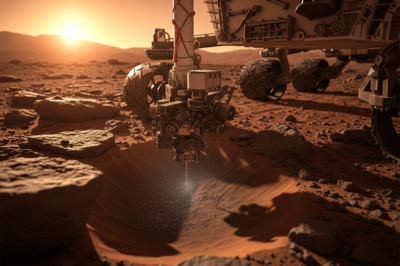
The quest for life beyond Earth has taken a monumental leap forward with the latest revelations from the Martian surface. NASA’s Curiosity rover, a car-sized laboratory that has been traversing the dusty plains of the Red Planet for over a decade, has recently uncovered complex organic molecules preserved within 3.5-billion-year-old sedimentary rocks in the Gale Crater. This discovery, highlighted by prominent scientific reports including detailed analysis in Chosun Ilbo, represents a significant milestone in planetary science. While organic molecules are not direct evidence of life themselves—as they can be produced by non-biological processes—they are the essential building blocks of biology. Finding them preserved in the harsh Martian environment for billions of years suggests that the Red Planet was once much more like Earth, possessing the chemical ingredients necessary to support living organisms. The identification of these molecules provides a roadmap for future missions and deepens our understanding of the solar system’s history, moving us closer to answering the ultimate question: Are we alone in the universe?
The Significance of Organic Molecules in Gale Crater
Gale Crater, the primary hunting ground for the Curiosity rover since its dramatic landing in 2012, was chosen because it showed signs of having been a lake in the distant past. The discovery of organic molecules within the mudstones of this crater is a breakthrough because it proves that organic chemistry can survive the intense radiation and oxidative conditions found on the Martian surface. The molecules found—including thiophenes, benzene, toluene, and small carbon chains—were locked inside rocks that formed from ancient lakebed silt. These rocks, part of the Murray formation, have acted as a time capsule, shielding the organic matter from the destructive effects of cosmic rays and perchlorates for over three billion years. Scientists utilized the Sample Analysis at Mars (SAM) instrument suite to heat these rock samples to temperatures exceeding 600 degrees Celsius, which released the organic vapors for analysis. The detection of sulfur-rich organics is particularly interesting, as sulfur can help stabilize organic matter, making it more likely to survive the long-term exposure to the Martian environment. This chemical resilience suggests that Mars may still hide a vast reservoir of organic materials beneath its surface, waiting to be discovered by deeper drilling missions.
The Role of the SAM Instrument Suite in Mars Exploration
The Sample Analysis at Mars, or SAM, is the heart of the Curiosity rover’s analytical capabilities. It is a sophisticated suite of three instruments: a gas chromatograph, a mass spectrometer, and a tunable laser spectrometer. Together, these tools allow scientists to identify the chemical composition of the Martian atmosphere and soil. When Curiosity drills into a rock, it collects a fine powder which is then delivered to SAM’s internal ovens. The process of heating the sample, known as pyrolysis, breaks down complex substances into simpler gaseous components that the instruments can then identify. The recent discovery of organic molecules required an incredibly delicate process of data interpretation, as the signals from these molecules can often be faint or masked by other chemical reactions occurring within the oven. By analyzing the fragments of carbon-based molecules, the team at NASA’s Goddard Space Flight Center was able to reconstruct the presence of larger, more complex structures that existed in the original rock. This level of precision is unprecedented in planetary exploration and showcases the technical marvel that the Curiosity mission represents, even after twelve years of continuous operation in one of the most hostile environments known to man.
Organic Matter vs. Biological Life: A Crucial Distinction
It is important for the public to understand the distinction between organic molecules and biological life. Organic molecules contain carbon and hydrogen, and often include oxygen, nitrogen, and other elements. While they are associated with life on Earth, they can also be created through abiotic processes. For instance, chemical reactions between water and rock (serpentinization) or the delivery of carbonaceous material via meteorites and interstellar dust can deposit organic compounds on a planet’s surface. NASA scientists remain cautious, stating that the molecules found by Curiosity could have originated from these non-biological sources. However, the fact that these molecules are found in a location known to have once had liquid water, a neutral pH, and essential nutrients makes the possibility of a biological origin much more compelling. Whether they are the remnants of ancient Martian microbes or simply the pre-biotic chemistry that existed before life emerged, their presence confirms that Mars had a fully functional carbon cycle and the potential to host life. The search now shifts from finding ‘if’ organics exist to determining ‘how’ they formed and whether they carry the specific isotopic signatures or structural patterns unique to biological processes.
Gale Crater: A Window into Mars Habitable Past
Gale Crater is a 96-mile-wide basin with a massive, layered mountain in the center known as Mount Sharp. As Curiosity climbs the foothills of Mount Sharp, it is essentially traveling through time, with each layer of rock representing a different epoch in Martian history. The mudstones where the organic molecules were found date back to a time when Mars was a much warmer and wetter world. During this period, Gale Crater was filled with a lake that may have persisted for millions of years. This stable environment would have provided ample time for life to emerge and evolve. The geological evidence suggests that the lake was fed by rivers and may have had groundwater systems connecting various basins. Such a persistent aqueous environment is a primary requirement for habitability. Furthermore, the discovery of minerals like smectite clays in the same layers as the organics suggests that the water was not too acidic or salty, which would have been conducive to life as we know it. The presence of these organic molecules in these specific layers strengthens the hypothesis that Gale Crater was once a thriving oasis in a world that was slowly losing its atmosphere and drying out.
The Radiation Challenge and Preservation of Biosignatures
One of the greatest obstacles in the search for life on Mars is the planet’s lack of a protective magnetic field and a thick atmosphere. This leaves the surface exposed to high levels of solar and cosmic radiation, which can break apart organic molecules over time. Additionally, the Martian soil contains perchlorates—highly reactive chemicals that can destroy organic matter when heated or exposed to certain conditions. For years, scientists wondered if any organic material could survive near the surface at all. The Curiosity discovery proves that certain geological conditions, such as the rapid burial of organic matter in fine-grained mudstone, can provide the necessary protection. The sulfur molecules found in the samples are thought to have acted as a preservative, creating a polymer-like structure that is more resistant to degradation. This ‘sulfurization’ process is similar to how ancient organic matter is preserved in oil shales on Earth. Understanding these preservation mechanisms is vital for future missions like the European Space Agency’s ExoMars rover, which will carry a drill capable of reaching two meters below the surface—far deeper than Curiosity’s few centimeters—where organic molecules may be even better preserved and potentially more abundant.
The Future of Mars Exploration: Sample Return and Human Missions
The findings from Curiosity have set the stage for the next phase of Martian exploration: the Mars Sample Return (MSR) mission. While Curiosity can analyze samples in situ, the instruments on a rover are limited by size and power constraints. To truly determine if the organic molecules have a biological origin, they must be brought back to Earth for analysis in the world’s most advanced laboratories. Currently, the Perseverance rover is collecting rock cores in Jezero Crater—another ancient lakebed—for this very purpose. These samples will eventually be picked up by a future mission and launched back to Earth. The data provided by Curiosity regarding the types of organics and the rocks they are found in is instrumental in helping scientists decide which samples from Perseverance are the most valuable. Beyond robotic missions, these discoveries also inform our plans for human exploration. Knowing that Mars once had the chemical components for life and possibly a more substantial atmosphere helps us understand the planet’s evolution and the resources that might be available for future astronauts. The discovery of ancient organics is not just a look into the past; it is a beacon for the future of humanity as a multi-planetary species.
Conclusion: A New Chapter in Planetary Science
In conclusion, the discovery of ancient organic molecules by NASA’s Curiosity rover is a watershed moment that transforms our perception of the Red Planet. No longer is Mars seen as a purely desolate, inorganic rock; it is a world with a complex chemical history that closely mirrors the early days of Earth. While we do not yet have a ‘smoking gun’ for extraterrestrial life, the presence of these building blocks in a formerly habitable environment makes the existence of ancient Martian life more plausible than ever. The resilience of these molecules over billions of years gives us hope that more definitive answers lie just beneath the surface. As we continue to explore, analyze, and eventually bring pieces of Mars back to our own world, we are not just studying a distant planet; we are uncovering the history of our own solar system and our place within it. The journey of Curiosity is far from over, and each drill hole brings us one step closer to solving the greatest mystery of all.






































Leave a Reply