
In Shorts
- A pivotal PCI workshop at Assam Don Bosco University convened 40+ pharmacy colleges to roll out the new NEP 2020-aligned B.Pharm curriculum.
- The revamped syllabus focuses on boosting clinical skills, research capabilities, and ethical practices for future pharmacists.
- The event also provided a comprehensive guide for implementing the Aadhaar Enabled Biometric Attendance System (AEBAS) to ensure institutional transparency.
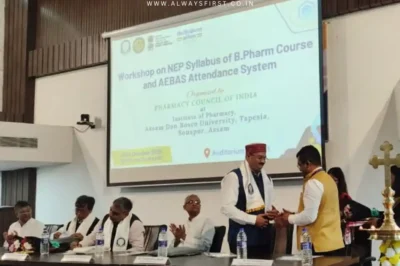
GUWAHATI, October 31, 2025 – The Institute of Pharmacy at Assam Don Bosco University (ADBU) became the epicenter of a major academic shift for the Northeast region, hosting a pivotal workshop organized by the Pharmacy Council of India (PCI). The one-day event focused on two critical changes: the implementation of the new National Education Policy (NEP) 2020 for the B.Pharm program and the adoption of the Aadhaar Enabled Biometric Attendance System (AEBAS).
The high-profile gathering saw the presence of PCI’s leadership, including Vice President Mr. Jashubhai Hirabhai Chaudhari and Dr. Deependra Singh, Chairman of the Education Regulation Committee. They were joined by ADBU’s Pro Vice Chancellor, Fr. Joseph Nellanatt, the university Registrar, and a strong contingent of over 80 delegates representing 40 pharmacy colleges from across Northeast India.
The inaugural session set a tone of both tradition and transformation. Following a tribute to the late musical legend Shri Zubeen Garg, the ceremony proceeded with a traditional ‘Lighting of the Lamp’. Prof. Raja Chakraborty, the workshop convener, opened the proceedings, stressing the urgent need for pharmacy education to evolve with global healthcare and digital trends.
In his address, Fr. Nellanatt expressed pride in ADBU’s role in hosting a discussion that contributes directly to national educational reforms. The keynote speaker, Mr. Jashubhai Chaudhari, laid out the core vision behind the NEP-aligned syllabus, emphasizing its role in building pharmacy graduates with superior clinical competence, a strong research aptitude, and unwavering ethical principles. He called on educators to embrace innovative, student-centric teaching methods.
The first technical deep-dive was led by Dr. Deependra Singh, who provided a comprehensive overview of the restructured B.Pharm curriculum. The session highlighted its competency-based framework and skill-enhancement modules, sparking vibrant discussions and fostering a spirit of collaboration among the attending academics.
Post-lunch, the focus shifted to digital governance with a hybrid session on the AEBAS. Led by the PCI’s IT department and observed by senior officials, the presentation detailed the system’s operational mechanics and compliance requirements, underlining its importance in bringing transparency and accountability to the academic environment.
The workshop concluded, having successfully bridged the gap between national policy-makers and regional educators, setting a new benchmark for academic innovation and regulatory partnership in India’s pharmaceutical education landscape.




































Leave a Reply