
In Shorts
- Nishant Kumar, son of Bihar CM Nitish Kumar, formally joined the Janata Dal (United) in Patna.
- His entry marks the beginning of his political career after largely staying away from public politics.
- The move comes amid speculation about leadership changes within JD(U).
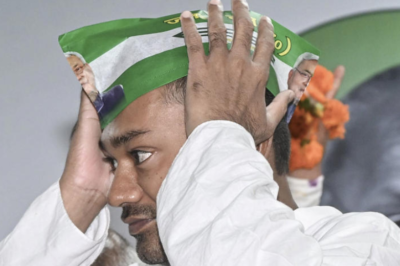
Nishant Kumar, the son of Bihar Chief Minister Nitish Kumar, has officially stepped into active politics by joining the Janata Dal (United). The announcement was made during a party event at the JD(U) headquarters in Patna, where senior leaders welcomed him into the organisation.
The move marks the first formal political role for Nishant Kumar, who had largely maintained a low public profile for years despite being closely associated with one of Bihar’s most influential political families. His entry has drawn significant attention across the state and among political observers.
Party leaders present at the induction ceremony expressed optimism that Nishant’s participation would strengthen the party organisation and energise its cadre. During the event, he thanked party workers for their support and promised to contribute to the growth of the organisation while carrying forward the developmental vision associated with his father’s leadership.
Nishant praised his father’s decades of public service, noting that the achievements during Nitish Kumar’s tenure as chief minister have played a major role in Bihar’s development. He said he hopes to continue working for the welfare of the state while learning from the experienced leadership within the party.
His induction also comes at a politically significant moment, as discussions about leadership transitions within the party and government have intensified in recent days. Observers believe that his entry could signal the beginning of a generational shift in JD(U), potentially shaping the party’s future direction in Bihar politics.
For now, Nishant Kumar’s political debut has sparked fresh conversations across the state, with supporters viewing it as the start of a new phase for the party while critics debate the broader implications for Bihar’s political landscape.






























Leave a Reply