
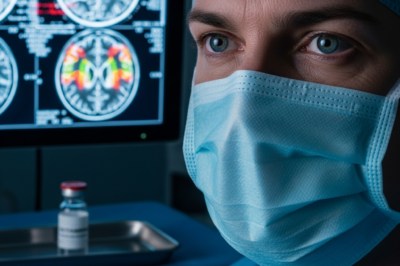
The New Frontier in Neurological Emergency Care
In the high-stakes environment of the neurological intensive care unit, few conditions are as daunting as Refractory Status Epilepticus (RSE). This medical emergency, characterized by seizures that persist despite the administration of standard anti-epileptic medications, has long been a puzzle for clinicians worldwide. However, a groundbreaking study recently featured in the European Medical Journal has shed a transformative light on a long-debated treatment: Ketamine. Traditionally known as a dissociative anesthetic and more recently as a rapid-acting antidepressant, Ketamine is now emerging as a vital prognostic tool. The research indicates that a patient’s immediate physiological response to Ketamine may actually predict their long-term recovery potential in cases of hard-to-stop seizures. This discovery is not merely a clinical curiosity; it represents a paradigm shift in how neurologists approach the most stubborn forms of epilepsy, potentially saving lives and reducing the long-term cognitive deficits associated with prolonged seizure activity. By acting as both a treatment and a predictive marker, Ketamine is providing doctors with a ‘neurological compass’ in the midst of a storm.
Understanding the Crisis of Refractory Status Epilepticus (RSE)
To appreciate the significance of this study, one must first understand the gravity of Status Epilepticus. When a seizure lasts longer than five minutes, or when seizures occur so close together that the person does not recover between them, it is classified as Status Epilepticus. This is a life-threatening condition because the brain is essentially locked in a state of hyper-excitation. If the seizures continue despite the initial use of benzodiazepines (like lorazepam or diazepam) and a second-line anti-seizure medication (like fosphenytoin or levetiracetam), the condition escalates to Refractory Status Epilepticus (RSE). In these instances, the mortality rate can climb as high as 35%, and those who survive often face significant neurological impairment. The current standard of care for RSE involves inducing a pharmacological coma using powerful sedatives like propofol or barbiturates. However, these treatments come with heavy risks, including cardiovascular instability, immune suppression, and prolonged dependency on mechanical ventilation. The search for an alternative that can stop seizures without causing systemic collapse has led researchers back to Ketamine, an NMDA receptor antagonist that operates on a fundamentally different biological pathway than traditional GABA-ergic drugs.
The European Medical Journal Findings: A Deep Dive
The study published in the European Medical Journal conducted a multi-center analysis of patients who were administered Ketamine as a third- or fourth-line treatment for RSE. What the researchers discovered was a clear correlation between the rapidity of seizure suppression following Ketamine administration and the likelihood of successful weaning from all sedative medications. Specifically, the data suggested that patients who showed a ‘positive response’ within the first 24 hours of Ketamine infusion had a significantly higher probability of returning to their functional baseline compared to those who did not. This ‘Ketamine response’ acts as a biological litmus test. In the past, clinicians often waited days or even weeks to see if a patient would recover, but this new data suggests that the brain’s interaction with Ketamine can provide an early signal of neuronal resilience. The study also highlighted that Ketamine was remarkably effective at stabilizing hemodynamics, often allowing for the reduction of other, more dangerous sedatives that cause low blood pressure. This dual benefit—seizure control and predictive signaling—makes Ketamine an indispensable asset in the neuro-ICU.
The Biochemistry of Ketamine: Why It Works Where Others Fail
The reason Ketamine succeeds when other drugs fail lies in the ‘GABA-NMDA shift.’ In the early stages of a seizure, the brain relies heavily on GABA receptors to inhibit excitation. However, as a seizure becomes prolonged, these GABA receptors are internalized into the neurons, making them inaccessible to standard drugs like benzodiazepines. Simultaneously, there is an upregulation of N-methyl-D-aspartate (NMDA) receptors. These NMDA receptors are excitatory, and their increased presence acts like fuel on a fire, sustaining the seizure state. Ketamine is unique because it is a potent NMDA receptor antagonist. Instead of trying to boost a failing GABA system, Ketamine directly blocks the excitatory NMDA receptors that are driving the refractory seizure. By doing so, it stops the glutamate-induced neurotoxicity that leads to brain damage. This mechanistic advantage is why Ketamine is often the only drug capable of breaking a super-refractory seizure. The European Medical Journal report emphasizes that this biochemical intervention does more than just stop the electrical activity; it protects the neurons from the metabolic exhaustion that typically follows a prolonged seizure event.
Challenges, Dosage, and Clinical Implementation
Despite the promising results, the implementation of Ketamine in seizure management is not without its hurdles. One of the primary concerns is the timing of administration. Historically, Ketamine was reserved as a ‘drug of last resort,’ used only after multiple other options had failed. However, the new research suggests that earlier use may lead to better outcomes. The ‘dosage window’ is also a critical factor; the study notes that higher doses (ranging from 2 to 5 mg/kg/hr) are often necessary to achieve seizure control in RSE, which is significantly higher than the doses used for depression or basic analgesia. There is also the issue of ’emergence delirium’ or hallucinations as the drug wears off, though in the context of a life-threatening seizure, these side effects are often considered manageable. Clinicians must also monitor for ‘Ketamine-induced cystitis’ or liver enzyme elevations during prolonged infusions. The EMJ article calls for a standardized protocol across hospitals to ensure that Ketamine is utilized safely and effectively, rather than being used haphazardly when all else has failed. Precision in dosing and timing is key to unlocking the drug’s predictive potential.
The Future of Precision Medicine in Epilepsy
Looking ahead, the findings from the European Medical Journal pave the way for a more personalized approach to epilepsy treatment. If Ketamine response can indeed predict long-term outcomes, it could allow for the development of ‘prognostic algorithms’ where ICU doctors can adjust their aggressiveness based on early drug responses. We are moving toward an era of ‘Precision Neurology,’ where the choice of medication is dictated not just by what is available, but by the specific molecular profile of the patient’s seizure state. There is also growing interest in how Ketamine might be combined with other neuroprotective agents to further enhance recovery. Furthermore, this research opens the door for looking at Ketamine’s role in ‘Super-Refractory Status Epilepticus’ (SRSE), where seizures continue even after 24 hours of general anesthesia. As we continue to refine our understanding of the NMDA receptor’s role in brain health, Ketamine stands as a testament to the idea that old drugs can find new, life-saving purposes. The journey from an anesthetic used in the 1960s to a sophisticated prognostic marker in 2024 is a remarkable evolution in medical science, offering hope to thousands of patients who face the terrifying prospect of uncontrollable seizures.
Conclusion: A New Chapter in Neurology
The European Medical Journal’s report on Ketamine represents a milestone in the treatment of refractory status epilepticus. By demonstrating that Ketamine response can predict a patient’s ability to recover, the study provides a vital tool for clinicians who must make split-second decisions in life-or-death situations. While further randomized controlled trials are necessary to solidify these findings into global guidelines, the current evidence is overwhelming. Ketamine is more than just an anesthetic; it is a neuroprotective powerhouse that offers a glimpse into the future of a patient’s brain health. As the medical community continues to embrace these findings, we can expect to see Ketamine integrated more deeply into emergency protocols, ensuring that the ‘hard-to-stop’ seizures of yesterday become the manageable challenges of tomorrow. For families and patients dealing with the trauma of epilepsy, this news is a beacon of hope, proving that even in the most dire circumstances, science is finding new ways to heal and predict the path to recovery.






































Leave a Reply