
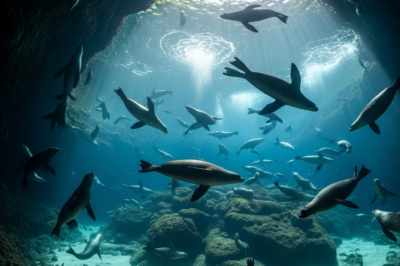
In a remarkable display of behavioral adaptation, marine researchers have documented rare seal species seeking refuge in “bubble caves”—unique underwater caverns with trapped air pockets—to avoid the constant disturbance caused by human tourism. This discovery, highlighted by Oceanographic Magazine, sheds light on the lengths to which endangered wildlife will go to maintain their privacy and safety in an increasingly crowded world.
The Evolution of Submerged Sanctuaries
These bubble caves serve as more than just a temporary hiding spot; they have become vital sanctuaries for species like the Mediterranean monk seal, one of the world’s most endangered pinnipeds. These caves are often inaccessible to casual swimmers and small boats, providing a quiet atmosphere where seals can rest, pup, and socialize without the stress of engine noises or underwater photography. Scientists note that the air pockets inside these caves allow the seals to breathe comfortably while remaining entirely hidden from the surface.
The Growing Cost of Over-Tourism on Marine Habitats
As coastal tourism continues to expand, the natural habitats of marine mammals are shrinking. The shift toward these secluded bubble caves is a direct response to the “human effect.” While it demonstrates the resilience of these animals, experts warn that this forced migration could lead to overcrowding in limited cave spaces and increased competition for resources. If tourism continues to push into these final frontiers, these rare seals may have nowhere left to go, highlighting an urgent need for strictly enforced marine protected areas.
A Call for Sustainable Marine Exploration
The discovery of these hidden retreats serves as a stark reminder of the footprint left by global travel. To ensure the survival of these magnificent creatures, the tourism industry must prioritize ecological boundaries over accessibility. Protecting these “bubble caves” is not just about saving a species; it is about respecting the silent boundaries that nature sets for its own survival.







































Leave a Reply