
In Shorts
- Former ICC chief says Pakistan cannot be punished for boycotting India game.
- Government directive seen as outside ICC’s disciplinary reach.
- Decision sparks debate on politics and fairness in global cricket.
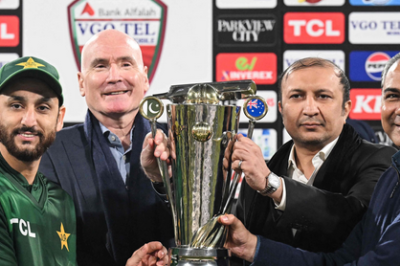
The controversy over Pakistan’s planned boycott of its February 15 T20 World Cup 2026 fixture against India took a new turn after a former International Cricket Council (ICC) chairman stated that the governing body lacks the authority to punish Pakistan for the move.
Ehsan Mani, who previously led the ICC and also served as chairman of the Pakistan Cricket Board (PCB), remarked that if Pakistan’s government orders its team not to take the field, the ICC cannot impose sanctions under existing regulations.
The decision by Islamabad to skip a marquee group-stage match in Colombo has ignited widespread debate across the cricket world. The government’s official announcement confirmed participation in the rest of the tournament while specifying that the side would not play India, a rare and high-value fixture that typically draws enormous global viewership.
Backers of the boycott see Mani’s comments as a validation of Pakistan’s stance amid ongoing political tensions with India. Others have noted that historical precedents, such as India’s refusal to travel to Pakistan for the 2025 Champions Trophy, have shaped the current perspective on what constitutes acceptable action by cricket boards under government influence.
Despite that, the ICC has publicly expressed concern about selective participation in its flagship events. Officials say such moves can undermine the integrity of global competition and have indicated there could be broader consequences if Pakistan refuses to honour the scheduled match.
The broader reaction to Pakistan’s decision has been mixed. Fans and analysts are split between supporting the government’s political stance and lamenting the potential damage to the sport’s reputation. Many observers also worry about the financial ramifications for broadcasters and tournament organisers if the high-stakes clash does not go ahead.
As the T20 World Cup approaches its kickoff, cricket’s governing bodies are under pressure to clarify the limits of authority and the future of international fixtures that are increasingly entangled with geopolitical dynamics.



































Leave a Reply