
In Shorts
- Kashmir’s Walnut Wood Carving, a protected Geographical Indication (GI) craft, relies on a suite of specialized traditional hand tools passed down through generations.
- Approximately 600 artisans in Srinagar clusters transform locally sourced walnut wood, seasoned for years, into iconic trays, bowls, and furniture featuring motifs like the Chinar leaf and grape bunches.
- The craft now stands at a crossroads, with modern power tools offering efficiency, posing a critical question about the future of its traditional, hands-on techniques.
In the bustling clusters of Fatehkadal and Lalbazar in Srinagar, the rhythmic tap-tap of a wooden mallet is a sound that echoes through centuries. This is the heartbeat of Kashmir’s revered Walnut Wood Carving, a handicraft so intricate and storied it has earned the protected Geographical Indication (GI) status. This art form transforms the region’s native walnut trees, which thrive at dizzying altitudes of 5,500 to 7,500 feet, into objects of breathtaking beauty.
The magic begins with the wood itself. Known locally as “Doon Kul,” the timber is prized for its hard, durable nature and close grain, which allows for exceptionally detailed work. The most valuable wood comes from the root, boasting a darker hue, while the trunk and branches provide lighter shades. Before a single tool touches it, the wood undergoes a patient seasoning process, dried naturally for two to four years to ensure it will last for generations.
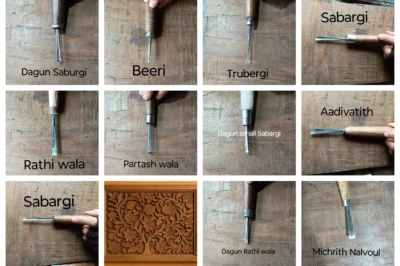
The true soul of this craft, however, lies in the artisan’s toolkit—a collection of hand-forged instruments with names as evocative as the motifs they carve. The process starts with the Touz, a simple marking pencil, sketching patterns of lotus flowers, iris, and iconic Chinar leaves. The Draz, a hand saw, cuts the planks, while the Randa, a hand planer, smoothens the surface.
Then comes the symphony of chisels. With a Sanglipen (wooden mallet) in one hand, the artisan employs a family of chisels like the Dagun, Beeri, and Choraswoul to dig, contour, and carve, making the motifs stand in deep relief. For precise lines, the Khari Hat (L-angle) and Phet Gaz (measuring tape) are indispensable. Unique tools like the Sumba Kil, a specially crafted nail, are used to create textured dots, while the Khurpa performs deep scooping and the Bor, a traditional hand drill, pierces the wood where needed.
Yet, this ancient practice is not immune to the pressures of modernity. A quiet revolution is underway, creating a fascinating dichotomy between tradition and technology. Where the Touz once ruled, digital tracing and laser marking now offer speed. The manual Bor is often replaced by an electric drill, and power carving tools are beginning to supplement the vast array of hand chisels.
While schemes like the government’s tool kit distribution under NHDP introduce modern electric planers and sanders to enhance efficiency, many master craftsmen argue that the soul of a piece is lost without the controlled force of a Sanglipen and the personal touch of a hand-held Khuraj (file). For the approximately 600 artisans keeping this craft alive, the future hinges on a delicate balance honoring the legacy embedded in their traditional tools while cautiously adopting modernity to ensure their art, and their livelihood, endures.




































Leave a Reply