
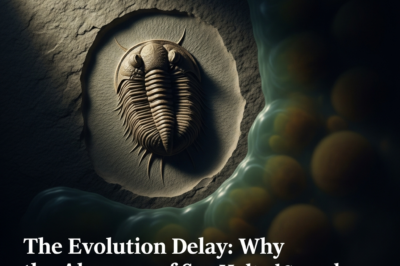
For hundreds of millions of years, the Earth was a planet of stagnant biological progression, a period often referred to by geologists and evolutionary biologists as the Boring Billion. While the foundations of life had been laid down early in the planet’s history, the leap from simple, single-celled organisms to complex, multicellular animals was inexplicably delayed. Recent scientific inquiries, highlighted by reports such as those from India Today, suggest a provocative and fascinating reason for this evolutionary standstill: the absence of sexual reproduction. For a vast epoch of time, life was locked in a cycle of asexual cloning, a process that, while efficient for survival, lacked the genetic dynamism required to fuel the rapid diversification of species. This evolutionary bottleneck meant that even though the environmental conditions might have been slowly shifting, the biological machinery of the time was unable to capitalize on those changes, effectively holding the animal kingdom in a state of arrested development until a fundamental shift in reproductive strategy occurred.
The Stagnation of the Boring Billion
To understand why life took so long to become complex, one must first look at the vast stretch of time between 1.8 billion and 800 million years ago. During this era, the Earth’s atmosphere and oceans were relatively stable, but also relatively nutrient-poor and low in oxygen compared to today. Life consisted primarily of prokaryotes and early eukaryotes that reproduced through binary fission or simple mitosis. In these processes, an organism essentially creates a carbon copy of itself. While this is an excellent strategy for populating a stable environment quickly, it offers very little in the way of genetic variation. Any mutations that occur are usually deleterious or neutral, and without the ability to mix genes from different individuals, the rate of beneficial adaptation remains glacial. Scientists believe that this lack of genetic shuffling was the primary reason why life remained microscopic and structurally simple for over a billion years. The world was alive, but it was not changing in any meaningful way, trapped in a loop of biological redundancy that prevented the emergence of specialized tissues, organs, or complex body plans.
The Biological Mechanics: Why Sex Changes Everything
The transition from asexual to sexual reproduction is perhaps the most significant milestone in the history of life, second only to the origin of life itself. In asexual reproduction, offspring are clones. In sexual reproduction, however, the process of meiosis and genetic recombination allows for the shuffling of DNA from two parents. This creates offspring that are genetically unique. This uniqueness is the fuel for natural selection. In a population of diverse individuals, some will inevitably be better suited to survive environmental stressors, such as fluctuating temperatures, new predators, or changing chemical compositions in the water. Furthermore, sexual reproduction allows for the purging of harmful mutations from a population more effectively than asexual reproduction, which can suffer from a phenomenon known as Muller’s Ratchet, where deleterious mutations accumulate until the lineage goes extinct. By introducing sex, early life unlocked the ability to rapidly test new genetic combinations, leading to the development of the complex proteins and cellular signaling pathways necessary for multicellularity.
Oxygen, Nutrients, and the Environmental Catalyst
While the biological shift to sexual reproduction was critical, it did not happen in a vacuum. The environmental conditions of the Proterozoic Eon played a dual role. For a long time, it was thought that low oxygen levels were the only factor holding back animal life. However, newer research suggests a feedback loop between the environment and biology. To support the high energetic costs of sexual reproduction and the development of large, multicellular bodies, organisms needed more oxygen. Conversely, the lack of biological complexity meant there were few organisms capable of significantly altering the planet’s chemistry. It was only when tectonic shifts and volcanic activity began to pump more minerals into the oceans—nutrients like phosphorus and molybdenum—that the biological engines of early eukaryotes could finally rev up. These nutrients are essential for DNA synthesis and energy transfer. Once the chemical ‘starvation’ of the oceans ended, the genetic innovations of sex could finally take hold, leading to a surge in biological complexity that eventually culminated in the first primitive animals.
The Red Queen Hypothesis and the Arms Race of Life
An essential concept in understanding why sexual reproduction eventually dominated is the Red Queen Hypothesis. Named after the character in Lewis Carroll’s ‘Through the Looking-Glass’ who must run just to stay in the same place, this theory suggests that organisms must constantly evolve just to survive against ever-evolving parasites and competitors. In an asexual world, a parasite that learns to infect one individual can infect every single clone in that population. Sex provides a moving target. By constantly reshuffling the genetic deck, sexual organisms ensure that their offspring have different immune profiles, making it much harder for pathogens to wipe out an entire species. This biological ‘arms race’ likely drove the development of the first complex sensors, shells, and movement capabilities in early animals. Without the initial push provided by the genetic diversity of sex, life would have remained a sitting duck for microscopic pathogens, never gaining the momentum needed to build the macroscopic wonders of the Ediacaran and Cambrian periods.
The Fossil Record and Molecular Clocks
Evidence for this delay is found in both the physical fossil record and the ‘molecular clocks’ found within the DNA of modern species. When scientists look at fossils from 1.2 billion years ago, they see very little change in morphology over tens of millions of years. However, as we approach the 800-million-year mark, the molecular clock—which measures the rate of genetic mutations—begins to show a dramatic uptick in divergence. This coincides with the first evidence of specialized cells and the structures required for gamete production. We begin to see the first evidence of red algae, which are among the earliest organisms known to have reproduced sexually. This transition marks the end of the Boring Billion and the beginning of a chaotic, creative period in Earth’s history where the blueprints for every major animal phylum we see today were first drafted. The delay was not due to a lack of time, but a lack of the right ‘reproductive technology’ to break the cycle of sameness.
Conclusion: The Legacy of a Sexual Revolution
The realization that ‘no sex’ was the primary hurdle for early animal life reshapes our understanding of evolutionary history. It suggests that complexity is not an inevitable outcome of life, but rather a hard-won prize achieved through the risky and energetic investment of sexual reproduction. Had life not found a way to shuffle its genetic material, the Earth might still be a planet of slime and single-celled drifters. The eventual adoption of sex triggered a biological explosion that transformed the planet from a quiet, chemical-laden orb into a vibrant, interconnected biosphere. As we look back at the millions of years where life was held back, we see that the diversity of the modern world—from the deepest oceans to the highest mountains—is the direct result of that ancient transition from cloning to courtship. It was the ultimate game-changer that allowed life to finally break free from its ancestral chains and fill the world with the infinite variety of forms we see today.





































Leave a Reply