
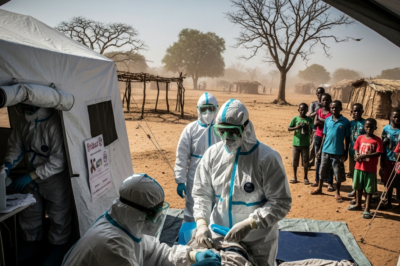
The Democratic Republic of the Congo (DRC) is once again at the epicenter of a public health crisis that threatens not only the heart of Africa but the health security of the global community. Following the recent alerts from Gavi, the Vaccine Alliance, regarding the complexities of the current Ebola virus disease (EVD) situation, the world is reminded that medical science alone cannot solve a crisis rooted in socio-political instability. Ebola, a hemorrhagic fever with a high fatality rate, has haunted the DRC since its discovery in 1976 near the Ebola River. However, the current landscape of the outbreak presents a multifaceted puzzle that defies traditional containment strategies. Gavi has identified four primary reasons why this particular surge is uniquely difficult to suppress, ranging from the volatile security situation to the deep-seated mistrust within local communities. As health workers don their protective gear and international agencies mobilize resources, the stakes have never been higher. This article provides an exhaustive analysis of these challenges, the historical context of the disease, and the structural barriers that continue to impede a final victory over one of the world’s most feared pathogens.
The Historical Shadow of Ebola in the Congo Basin
To understand the current predicament, one must look back at the DRC’s long and painful history with the virus. Since 1976, the country has faced more than a dozen outbreaks, each varying in scale and severity. The 2018-2020 outbreak in the eastern provinces of North Kivu and Ituri was the second-largest in history, resulting in over 2,200 deaths. This history has created a paradoxical situation: while the DRC has some of the world’s most experienced Ebola responders, the frequent recurrence of the virus has also led to a sense of exhaustion and skepticism among the populace. The virus typically jumps from animals to humans through the consumption of bushmeat or contact with infected fruit bats. Once in the human population, it spreads through direct contact with blood, secretions, or other bodily fluids. The biological nature of the virus, combined with the geographical vastness of the DRC, makes early detection nearly impossible in remote forest regions. Gavi’s recent reports emphasize that the virus is no longer just a biological threat but a symptom of the broader systemic failures in the region’s infrastructure and security apparatus.
Reason 1: Proliferation of Conflict and Insecurity
Perhaps the most daunting obstacle identified by Gavi is the pervasive insecurity in the regions where Ebola frequently emerges. Eastern DRC is home to over 100 armed groups, including the Allied Democratic Forces (ADF) and the M23 movement. This volatility creates a ‘red zone’ where health workers are at constant risk of kidnapping or violence. In previous outbreaks, Ebola Treatment Centers (ETCs) were attacked, and healthcare professionals were killed, leading to the temporary withdrawal of international aid organizations. When security collapses, contact tracing—the backbone of Ebola containment—stops entirely. If responders cannot safely reach a village to monitor those exposed to the virus, the chain of transmission continues unchecked. This environment of fear also forces populations to flee, potentially carrying the virus into internally displaced persons (IDP) camps or across international borders into neighboring Uganda or Rwanda, turning a localized outbreak into a regional catastrophe.
Reason 2: The Logistical Nightmare of the ‘Cold Chain’
Geography remains a silent but formidable enemy. The DRC is roughly the size of Western Europe, but it lacks the paved roads and reliable power grids necessary for a modern medical response. The most effective vaccines, such as Merck’s Ervebo, require an ultra-cold chain, meaning they must be stored at temperatures between -60°C and -80°C. Maintaining these temperatures in the middle of a tropical rainforest, where humidity is high and electricity is non-existent, requires specialized solar-powered freezers and expensive helicopter transport. Gavi highlights that the ‘last mile’ of delivery is where the system often fails. Moving medical supplies via dirt tracks that turn into mud pits during the rainy season causes delays that allow the virus to stay several steps ahead of the response teams. Without a massive investment in rural infrastructure, the rapid deployment of vaccines will remain an uphill battle.
Reason 3: Deep-Seated Community Mistrust and Misinformation
In many parts of the DRC, there is a profound disconnect between the government, international agencies, and the local population. Years of neglect and conflict have fostered a climate of suspicion. When outsiders arrive in white hazmat suits, taking away the sick and telling people they cannot bury their dead according to ancestral traditions, it often sparks resistance. Rumors frequently circulate that Ebola is a fabrication by the government to secure foreign aid or that the vaccines themselves are tools for sterilization. This ‘infodemic’ is as dangerous as the virus itself. Gavi points out that without community ‘buy-in,’ containment is impossible. Traditional burial practices, which involve washing and touching the deceased, are major super-spreader events because the viral load is highest at the time of death. Changing these cultural norms requires delicate negotiation with community leaders, a process that takes more time than the fast-moving virus allows.
Reason 4: Financial Constraints and Global Health Fatigue
The fourth pillar of the challenge is the fluctuating nature of international funding and attention. When a major outbreak hits the headlines, there is often a surge of donor interest. However, as soon as the numbers decline, funding dries up. Gavi, the Vaccine Alliance, plays a critical role in managing the global stockpile of Ebola vaccines, but they cannot operate in a vacuum. The DRC’s health system is simultaneously battling outbreaks of measles, malaria, and cholera, all of which often claim more lives than Ebola. The competition for limited financial resources means that surveillance systems are often underfunded during ‘peacetime’ between outbreaks. Without consistent investment in strengthening the primary healthcare system, the DRC remains in a cycle of reactive response rather than proactive prevention. Experts argue that the world must shift from emergency funding to long-term health system resilience to truly break the cycle.
The Path Forward: Innovation and Integrated Response
Despite these four massive hurdles, there are reasons for cautious optimism. The development and regulatory approval of two Ebola vaccines have fundamentally changed the landscape of the fight. Gavi’s strategic stockpile ensures that doses are available for immediate deployment. Furthermore, the use of ‘ring vaccination’—vaccinating everyone who came into contact with an infected person and their contacts—has proven effective even in challenging environments. The next phase of the battle must involve better integration of Ebola response into the general health services to reduce the stigma and fear associated with specialized Ebola units. Training local health workers who are already trusted by their communities is also vital. Ultimately, the containment of Ebola in the DRC is not just a medical challenge; it is a test of the world’s ability to address the intersection of poverty, conflict, and disease in an interconnected world. If the international community fails to support the DRC in overcoming these four hurdles, the risk of a wider epidemic remains a clear and present danger.







































Leave a Reply