
The Strategic Significance of the Strait of Hormuz
The Strait of Hormuz stands as perhaps the most critical maritime chokepoint in the global energy landscape. Located between Oman and Iran, it connects the Persian Gulf with the Gulf of Oman and the Arabian Sea. It is the primary artery through which the world’s oil flows, with approximately 21 million barrels of crude oil, condensate, and refined products passing through it every single day. This represents roughly 21 percent of global petroleum liquids consumption. When Tehran suggests even the possibility of closing this waterway, it is not merely a regional threat but a direct challenge to the stability of the global economy. For decades, the threat to close the Strait has been the ultimate leverage for Iran, a card played whenever international pressure over its nuclear program or regional influence reaches a boiling point. However, the recent statements from the Trump administration signal a shift in how Washington perceives these threats. Donald Trump’s assertion that ‘Iran can’t blackmail us’ underscores a belief that the United States, now a net exporter of energy, is less vulnerable to such disruptions than it was in the 1970s or 80s. Yet, the psychological impact on oil markets remains profound, as any physical disruption would lead to an immediate and sharp spike in prices, affecting everything from manufacturing in China to the cost of gasoline in the American Midwest. The geography of the Strait is particularly problematic for security; at its narrowest point, the shipping lanes are only two miles wide, making them susceptible to naval mines, fast-attack boats, and land-based missile batteries managed by the Islamic Revolutionary Guard Corps (IRGC).
Trump’s Hardline Response to Tehran’s Rhetoric
Donald Trump has consistently maintained a policy of ‘maximum pressure’ against the Iranian regime. This strategy involves heavy economic sanctions aimed at crippling Iran’s ability to fund its military and regional proxies. Following the news of Tehran’s recent ‘flip-flop’ regarding their intent to blockade the Strait, Trump was quick to dismiss the move as a desperate attempt at coercion. By stating that the U.S. will not be blackmailed, the administration is effectively calling Iran’s bluff. This hardline stance is built on the premise that Iran needs the Strait open as much as the rest of the world does, as it remains their primary route for whatever oil they manage to export under the current sanctions regime. The Trump administration’s narrative suggests that the Iranian leadership is fractured, leading to the inconsistent messaging that has characterized their recent diplomatic efforts. One day, a high-ranking military official may threaten to shut down global energy supplies, while the next day, a diplomat might suggest a willingness to return to the negotiating table if sanctions are lifted. This internal inconsistency is viewed by Washington as a sign of weakness. Trump’s rhetoric is designed to project strength and stability, reassuring allies in the Gulf, particularly Saudi Arabia and the United Arab Emirates, that the U.S. remains committed to ensuring the freedom of navigation in international waters. This commitment is backed by the presence of the U.S. Navy’s Fifth Fleet, based in Bahrain, which regularly patrols the area to deter Iranian aggression.
The Anatomy of the Flip-Flop: Contradictory Signals from Tehran
The term ‘flip-flop’ in the context of Iranian foreign policy often refers to the tug-of-war between the country’s hardliners and its more pragmatic elements. The IRGC, which operates independently of the regular military, often takes a more aggressive stance, viewing the control of the Strait of Hormuz as a sovereign right and a tool of asymmetric warfare. Conversely, the foreign ministry often tries to present a more cooperative face to the international community to avoid further isolation. In recent days, the world witnessed a classic example of this duality. Initially, threats were issued that suggested that if Iran could not export its oil, no one would. This was interpreted as a direct threat to the transit of tankers through the Strait. However, within forty-eight hours, subsequent statements softened this position, emphasizing that Iran has no desire for conflict and values the security of the region. This back-and-forth serves several purposes for Tehran. It creates uncertainty in the markets, which can drive up oil prices in the short term, providing a small revenue boost for their constrained economy. It also tests the resolve of the international community, particularly the European signatories of the original nuclear deal. By oscillating between aggression and diplomacy, Tehran hopes to find a crack in the ‘maximum pressure’ campaign. However, the Trump administration’s refusal to acknowledge these shifts as anything other than ‘blackmail’ suggests that the U.S. is no longer willing to engage in the diplomatic dance that characterized previous administrations’ interactions with the Islamic Republic.
Global Economic Implications: Energy Security at Stake
The economic ramifications of a potential conflict in the Strait of Hormuz cannot be overstated. While the U.S. has achieved energy independence in recent years, the global oil market is integrated. A supply shock in the Middle East would immediately affect global Brent crude prices. Major Asian economies, including India, China, Japan, and South Korea, are heavily dependent on oil flowing through the Strait. For India, which imports over 80 percent of its crude oil requirements, any disruption would be catastrophic for its fiscal deficit and inflation rates. The ‘blackmail’ Trump refers to is essentially a threat to the global standard of living. Beyond oil, the Strait is also a vital corridor for Liquefied Natural Gas (LNG), with Qatar being one of the world’s largest exporters. A blockade would trigger an energy crisis in Europe and Asia simultaneously. Analysts suggest that even if the Strait were closed for a few days, the insurance premiums for maritime shipping would skyrocket, creating a secondary economic shock. This is why the U.S. has often led ‘International Maritime Security Constructs’ to provide escort services for commercial vessels. By framing the issue as an attempt at blackmail, Trump is positioning the U.S. as the protector of the global commons, contrasting American ‘reliability’ with Iranian ‘volatility.’ This narrative is crucial for maintaining the coalition of nations that support the continued sanctions, as it justifies the economic pain felt by those who can no longer buy cheaper Iranian crude.
The Role of International Allies and the Maximum Pressure Campaign
The success of Donald Trump’s stance against Iran relies heavily on the cooperation of regional and international allies. Countries like Saudi Arabia and the UAE have long viewed Iran as an existential threat and have welcomed Trump’s refusal to be intimidated by the Strait of Hormuz threats. These nations have invested heavily in alternative pipelines that bypass the Strait, such as the Habshan–Fujairah oil pipeline in the UAE and the East-West Pipeline in Saudi Arabia. While these pipelines can only handle a fraction of the total volume that moves through the water, they represent a strategic move to reduce Tehran’s leverage. On the other hand, the U.S. faces a more complex relationship with its European allies, who have traditionally sought to preserve the Joint Comprehensive Plan of Action (JCPOA). Trump’s declaration that Iran’s flip-flopping will not work is also a message to the EU: that attempting to find ‘workarounds’ for sanctions only emboldens Tehran’s aggressive maritime posturing. The ‘Maximum Pressure’ campaign is designed to force Iran back to the negotiating table for a ‘better’ deal that covers not just its nuclear program, but also its ballistic missile development and regional activities. By characterizing the threat to the Strait as blackmail, the U.S. is trying to delegitimize Iran’s grievances in the eyes of the global community, portraying them as a rogue state using the global energy supply as a hostage. This geopolitical positioning is intended to make it politically difficult for any nation to support Iran’s calls for sanctions relief without appearing to give in to threats.
Military Posturing and the Threat of Kinetic Conflict
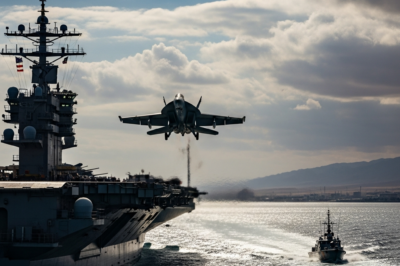
Behind the war of words lies the very real possibility of military confrontation. The U.S. Central Command (CENTCOM) has frequently updated its contingency plans for keeping the Strait of Hormuz open. This involves sophisticated mine-sweeping operations, anti-submarine warfare, and the deployment of carrier strike groups to provide air cover. The IRGC, in contrast, utilizes a strategy of ‘swarming’ with small, fast-attack craft armed with missiles and torpedoes. This asymmetric approach is designed to overwhelm the sophisticated defenses of a large destroyer or cruiser. Trump’s assertion that ‘Iran can’t blackmail us’ implies a confidence in the U.S. military’s ability to maintain the flow of commerce regardless of Tehran’s actions. However, experts warn that any kinetic exchange in the Strait would be difficult to contain. A ‘limited’ strike on an Iranian missile site could quickly escalate into a full-scale regional war involving Hezbollah in Lebanon and various militias in Iraq and Yemen. This ‘gray zone’ conflict, where tensions remain high but full-scale war is avoided, is the current status quo. Trump’s rhetoric serves as a deterrent, signaling that the cost of an actual blockade would be the total destruction of the Iranian navy. This high-stakes poker game requires clear communication to avoid miscalculations. Tehran’s flip-flops are dangerous because they could lead to a situation where one side misinterprets the other’s resolve, leading to an accidental clash that neither truly wants but both feel compelled to finish.
Conclusion: Navigating the Fragile Peace
The standoff between the Trump administration and Tehran over the Strait of Hormuz represents a fundamental clash of visions for the Middle East. For Trump, the refusal to be ‘blackmailed’ is a cornerstone of an ‘America First’ foreign policy that seeks to rebalance power dynamics and end what he views as years of American concessions to a hostile regime. For Iran, the Strait remains their most potent defensive and offensive tool in an increasingly desperate struggle against economic strangulation. The recent ‘flip-flop’ by Tehran suggests a leadership that is probing for weaknesses in the American resolve, only to find a president who is more than willing to meet rhetoric with even stronger defiance. As long as the sanctions remain in place and the diplomatic channels remain clogged, the Strait of Hormuz will continue to be a flashpoint. The global community must remain vigilant, as the stability of the international order depends on the free flow of commerce through these narrow waters. Whether Trump’s strategy will eventually lead to a new negotiation or a catastrophic conflict remains the most pressing question in contemporary geopolitics. For now, the message from Washington is clear: the era of maritime threats as a tool for diplomatic leverage is over, and the U.S. is prepared to defend its interests and those of its allies with both economic and military might.


































Leave a Reply