
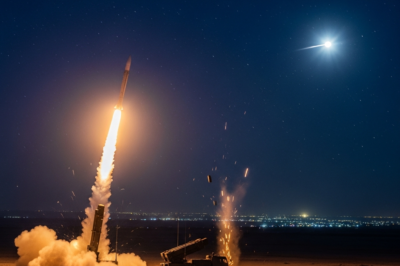
The Middle East once again finds itself at a precarious crossroads as the United Arab Emirates (UAE) Ministry of Defence reports the activation of its advanced air defense systems to counter incoming missile threats. This development, initially flagged by major financial news outlets like Forex Factory, has sent ripples through both the geopolitical landscape and the international financial markets. As one of the world’s most vital hubs for trade, tourism, and energy, any threat to the UAE’s internal security is not merely a regional concern but a global one. The swift response from the UAE’s multi-layered defense architecture highlights the high state of readiness maintained by the federation in a region characterized by shifting alliances and asymmetric warfare. In this detailed analysis, we explore the immediate facts of the incident, the historical context of such threats, the technological sophistication of the UAE’s defense shield, and the far-reaching implications for global oil prices and currency stability.
Immediate Developments: The UAE Air Defense Response
In the early hours of the reported incident, the UAE’s military command confirmed that its air defense interceptors were engaged to neutralize hostile targets. While the specific origin of the missile threat remains under investigation by national security agencies, the immediate priority was the protection of civilian infrastructure and high-population urban centers like Abu Dhabi and Dubai. Eyewitness reports and localized social media updates noted the characteristic streaks of interceptor missiles lighting up the night sky, followed by distant sonic booms that indicated successful high-altitude neutralizations. The UAE Ministry of Defence has emphasized that there were no casualties or significant damage to property, demonstrating the efficacy of their integrated defense network. This incident serves as a stark reminder of the ongoing volatility in the Gulf region, where state and non-state actors frequently use ballistic and cruise missile technology to project power or exert political pressure. The immediate notification on Forex Factory was a result of the lightning-fast reaction of algorithmic trading bots that monitor geopolitical keywords, reflecting the deep integration between regional security and global capital flows.
A Legacy of Resilience: Historical Context of Regional Threats
To understand the gravity of the current threat, one must look back at the historical trajectory of security challenges faced by the UAE. Over the last decade, the UAE has transitioned from a purely defensive posture to a more proactive role in regional security. The most significant previous escalation occurred in early 2022, when the Houthi movement in Yemen launched a series of drone and missile attacks targeting industrial sites and transport hubs in Abu Dhabi. Those attacks marked a turning point, prompting the UAE to further accelerate its procurement of cutting-edge defense technology. Historically, the UAE has been a pillar of stability, but its involvement in regional coalitions—most notably the intervention in Yemen—has made it a target for proxy forces. The tension between the UAE and various regional factions is often a byproduct of larger rivalries, such as the friction between the GCC nations and Iranian-backed groups. Each incident of missile activation is not an isolated event but a chapter in a long-running saga of power dynamics in the Arabian Peninsula. By successfully intercepting these threats, the UAE continues to signal that its ‘zero-tolerance’ policy toward security breaches remains intact, even as it navigates complex diplomatic waters with its neighbors.
The Technical Vanguard: Understanding the UAE’s Integrated Defense Shield
The UAE boasts one of the most sophisticated and expensive air defense networks in the world. At the heart of this system is the Terminal High Altitude Area Defense (THAAD), a US-made system designed to intercept short, medium, and intermediate-range ballistic missiles during their terminal phase. The UAE was the first international customer to deploy THAAD, and it remains a cornerstone of their strategic defense. In addition to THAAD, the UAE utilizes the Patriot PAC-3 system, which is optimized for engaging tactical ballistic missiles, cruise missiles, and advanced aircraft. The integration of these systems is managed through a highly advanced Command, Control, Communications, Computers, Intelligence, Surveillance, and Reconnaissance (C4ISR) architecture. This allows for real-time data sharing between various sensor arrays, including ground-based radars and airborne early warning systems. Furthermore, the UAE has explored the inclusion of short-range systems like the South Korean M-SAM and potentially Israeli-developed technologies following the Abraham Accords. This multi-layered approach ensures that if a primary interceptor fails, secondary and tertiary layers are ready to engage. The technical success of these systems in real-world combat scenarios provides a sense of security to the millions of expatriates and investors who call the UAE home, reinforcing the country’s status as a safe haven in a turbulent part of the world.
Macro-Economic Ripples: Forex Markets and Oil Volatility
The reason this security alert appeared prominently on Forex Factory is the intrinsic link between Gulf security and global finance. The UAE is a major player in OPEC+, and any threat to its stability immediately triggers a ‘risk-off’ sentiment among global investors. Within minutes of the news, Brent Crude and West Texas Intermediate (WTI) futures typically see a spike as traders price in a ‘geopolitical risk premium.’ The UAE’s Dirham (AED) is pegged to the US Dollar, providing a layer of currency stability; however, the volatility is felt in the credit default swaps (CDS) and the local equity markets, such as the Dubai Financial Market (DFM) and the Abu Dhabi Securities Exchange (ADX). International investors often view the UAE as a barometer for regional health. If the UAE’s air defenses are active, it suggests an escalation that could potentially affect the Strait of Hormuz—the world’s most important oil transit chokepoint. Furthermore, the aviation sector, a massive component of the UAE economy, faces immediate operational challenges. Carriers like Emirates and Etihad must quickly assess flight paths, and any prolonged threat could lead to higher insurance premiums for the shipping and aviation industries. The speed at which Forex Factory and other financial aggregators disseminate this news underscores the fact that in the modern era, military conflict and market fluctuations are two sides of the same coin.
The Geopolitical Chessboard: Regional Power Dynamics and Alliances
The activation of air defenses is a high-stakes move on the geopolitical chessboard. It forces international allies, particularly the United States, to reaffirm their security guarantees. The US maintains a significant military presence at the Al Dhafra Air Base, and the cooperation between the UAE Armed Forces and US CENTCOM is vital for regional stability. This latest threat also tests the durability of the Abraham Accords. As the UAE builds closer ties with Israel, it simultaneously faces pressure from regional actors who oppose this normalization. The diplomatic challenge for the UAE is to maintain its role as a global trade hub while managing these adversarial relationships. There is also the ‘Iran factor’; while the UAE has sought to de-escalate tensions with Tehran through direct dialogue and trade, the activity of Iranian-aligned proxy groups in Yemen, Iraq, and Lebanon remains a constant threat. Security analysts argue that these missile threats are often intended as ‘messages’—reminders of the capability of these groups to disrupt the economic prosperity of the Gulf. Consequently, the UAE’s response is not just military but also diplomatic, as they leverage their influence in the United Nations and other international bodies to condemn these acts of aggression and seek collective security solutions.
The Human and Urban Impact: Safety in a Global Metropolis
Beyond the technical and economic metrics, there is the human element. The UAE is home to over 200 nationalities, making it a truly globalized society. The government’s ability to protect this diverse population is crucial for maintaining social cohesion and economic momentum. The Ministry of Interior and the National Emergency Crisis and Disasters Management Authority (NCEMA) have developed robust protocols for notifying the public during such events. Unlike many other conflict zones, the UAE has managed to maintain a sense of normalcy even during periods of heightened tension. The sophistication of the air defense system acts as a psychological buffer for the residents. However, the psychological impact of hearing interceptors or receiving emergency alerts cannot be ignored. The government invests heavily in public safety campaigns and ensures that infrastructure—from the Burj Khalifa to the sprawling ports of Jebel Ali—is protected by state-of-the-art surveillance. The resilience of the UAE’s urban centers depends on the invisible shield provided by the air defense systems. As the threat landscape evolves to include smaller, harder-to-detect drones and loitering munitions, the UAE is already pivoting toward directed-energy weapons and AI-driven detection to ensure that its cities remain among the safest in the world.
Conclusion: The Future of Gulf Security and Stability
The recent missile threat and the UAE’s successful defensive response underscore a fundamental reality of the 21st century: prosperity requires constant vigilance. The UAE has proven that its investment in high-end military technology like THAAD and Patriot systems is not just for show, but a functional necessity. While the markets may react with short-term volatility, the long-term confidence in the UAE’s ability to protect its borders and its economy remains strong. Moving forward, the focus will likely shift toward further regional integration and the development of a unified air defense network among GCC members. Diplomacy will continue to be the first line of defense, but as this incident shows, a robust military capability is the essential backstop that allows diplomacy to function from a position of strength. For the global community, the message is clear: the UAE is prepared to defend its status as a global leader in trade and innovation, no matter what challenges may arise in the complex skies of the Middle East.



































Leave a Reply