
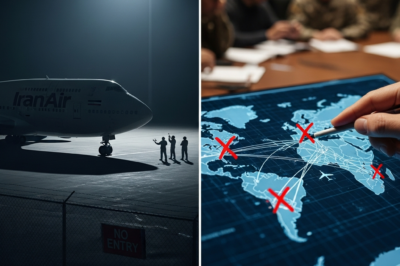
In a dramatic escalation of the already volatile relationship between Washington and Tehran, the United States is reportedly preparing to deploy a new, aggressive strategy aimed at grounding the Islamic Republic of Iran’s civil and commercial aviation fleet. According to recent statements highlighted by figures like Scott Bessent and reported by major outlets including India Today, the U.S. intends to systematically block Iranian airlines from accessing international landing spots and, perhaps more critically, essential refueling services across the globe. This move marks a significant departure from standard economic sanctions, moving into the realm of a functional ‘logistical blockade’ pressure campaign without a formal declaration of kinetic war. By targeting the operational lifelines of carriers such as Iran Air and Mahan Air—the latter frequently accused by the U.S. of transporting personnel and weaponry for the Islamic Revolutionary Guard Corps (IRGC)—the American administration aims to isolate the Iranian regime to an unprecedented degree. As the geopolitical landscape shifts, this policy could trigger a domino effect across the Middle East, affecting global oil prices, diplomatic channels, and the precarious balance of power in the Persian Gulf.
The Bessent Strategy: A New Phase of Maximum Pressure
The strategy articulated by Scott Bessent, a prominent economic voice linked to the shifting American foreign policy landscape, suggests that the U.S. is looking beyond mere financial freezing. The goal is to create a physical and operational barrier for Iranian state-linked assets. By leveraging American influence over global aviation insurance, aircraft parts supply chains, and international fuel providers, Washington can effectively make it impossible for Iranian aircraft to operate outside their own borders. This approach is reminiscent of the ‘Maximum Pressure’ campaign but with a refined focus on the actual movement of people and goods. If Iranian airlines cannot refuel in third-party countries, their range is severely limited, effectively cutting Tehran off from its partners in Europe, Asia, and even parts of the Middle East. This isn’t just about economic loss; it’s about signaling that the sky is no longer a safe harbor for the regime’s logistics.
The Mechanics of Aviation Isolation: Landing Rights and Refueling
How exactly does the U.S. plan to shut down an entire nation’s airline access? The mechanism is twofold: diplomatic pressure and secondary sanctions. Under international aviation law, landing rights are governed by bilateral agreements. However, the U.S. can exert immense pressure on host nations by threatening to sanction their own national carriers or airport authorities if they continue to service Iranian planes. The most potent weapon in this arsenal is the restriction on refueling. Most global fuel suppliers rely on U.S.-linked financial systems or utilize equipment and chemicals produced by American companies. If the U.S. Treasury Department mandates that any entity refueling an Iranian aircraft will lose access to the U.S. dollar, almost every major airport in the world will be forced to comply to save their own business. We have seen precursors to this in airports across Europe and Asia, but the proposed new measures would close the remaining loopholes that have allowed Iranian flights to continue under the radar.
Historical Context: The Long Shadow of Sanctions
To understand the gravity of this move, one must look back at the history of U.S.-Iran relations. Since the 1979 revolution, and more specifically since the U.S. withdrawal from the Joint Comprehensive Plan of Action (JCPOA) in 2018, Iran’s aviation sector has been under heavy fire. For decades, Iran was forced to fly some of the world’s oldest aircraft because they were banned from buying new Boeing or Airbus planes. The 2015 nuclear deal briefly opened the door for fleet renewal, but that door slammed shut shortly after. The current focus on landing spots and refueling is a response to Iran’s continued use of its commercial fleet for dual-purpose missions. The U.S. intelligence community has long maintained that Mahan Air operates as a shadow transport wing for the Quds Force, moving militants and hardware to conflict zones in Syria, Iraq, and Yemen. By shutting down these flight paths, the U.S. aims to cripple the IRGC’s regional reach.
Geopolitical Implications: Ripples Across the Middle East
The implications of grounding Iran’s aviation industry extend far beyond the runways of Tehran. Regional hubs like Dubai, Doha, and Istanbul, which often serve as transit points for Iranian travelers, would find themselves in a precarious position. If these hubs are forced to choose between servicing Iranian flights and maintaining their lucrative routes to the United States, the choice is economically clear but diplomatically fraught. Furthermore, this move is likely to draw a sharp reaction from Iran’s remaining allies, specifically Russia and China. As Iran becomes more isolated from the Western-aligned world, it will inevitably lean closer to the Eurasian power bloc. We may see the development of parallel aviation infrastructures or ‘dark flights’ that operate outside the traditional ICAO (International Civil Aviation Organization) frameworks, much like the ‘ghost tankers’ used to transport sanctioned Iranian oil.
The Humanitarian and Economic Cost to Iranian Civilians
While the U.S. insists that these measures target the regime and its military capabilities, the reality is that the Iranian civilian population often bears the brunt of such policies. Restricting landing rights and refueling makes international travel nearly impossible for ordinary Iranians, students studying abroad, and families separated by borders. It also impacts the import of medicine and high-tech medical equipment, much of which is transported via commercial air cargo. From a safety perspective, preventing Iranian airlines from accessing modern maintenance facilities or refueling with high-quality fuel increases the risk of aviation accidents. Critics of this ‘hardline’ approach argue that it alienates the Iranian public, who may see the U.S. as targeting their basic freedom of movement rather than the political leadership. This internal resentment is a double-edged sword that Washington must carefully navigate if it hopes to see internal change in Iran.
Future Outlook: Is This a Prelude to Direct Conflict?
The central question surrounding the Bessent-led rhetoric is whether this is a final diplomatic push or a precursor to a wider military confrontation. History shows that economic blockades and the severing of transportation links are often the final steps before kinetic engagement. By grounding the Iranian Air Force’s commercial proxies, the U.S. is essentially performing a ‘shaping operation’ to limit Iran’s ability to respond to potential future strikes. However, Tehran is not without its own leverage. The threat of closing the Strait of Hormuz remains their ‘nuclear option’ in the realm of conventional trade. If Iran feels completely backed into a corner with no way for its people or goods to move, it may decide that the cost of maintaining the status quo is higher than the cost of a regional war. As we move into this high-stakes period of ‘Live’ updates and rapid policy shifts, the international community watches with bated breath to see if diplomacy can find a landing spot, or if the engines of war are finally being primed.




































Leave a Reply