
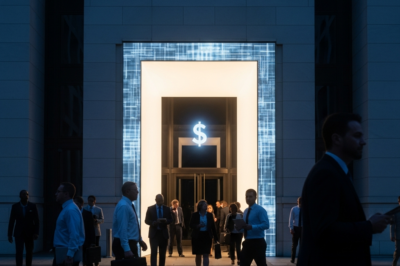
The Dawn of the Big Payback: US Trade Policy Shift
In what is being hailed as one of the most significant financial reversals in recent American trade history, the United States government has officially launched a dedicated portal designed to facilitate the refund of a staggering $166 billion in tariffs. These funds, collected primarily during the administration of former President Donald Trump, represent a controversial chapter in international trade relations that has finally reached a legal and administrative climax. The move follows a series of high-stakes legal battles, culminating in a Supreme Court-related trajectory that essentially nixed the procedures under which these billions were extracted from American businesses. For years, importers, retailers, and manufacturing giants have argued that the aggressive trade maneuvers conducted under Section 301 of the Trade Act of 1974 were overextended and, in many cases, legally flawed. The establishment of this refund portal marks a moment of financial restitution for thousands of companies that were caught in the crossfire of the US-China trade war. This development is not just about the money; it represents a fundamental re-evaluation of executive power in the realm of international commerce and a massive injection of liquidity back into the private sector at a critical economic juncture.
The Origin of the Trade Conflict: Section 301 and the Trump Era
To understand the magnitude of this $166 billion payback, one must look back to the year 2018 when the Trump administration initiated a robust campaign to counter what it described as unfair trade practices by China. Utilizing Section 301, the administration imposed multiple rounds of tariffs on hundreds of billions of dollars worth of Chinese imports. These tariffs were categorized into various lists—List 1, List 2, List 3, and List 4A. While the initial rounds targeted industrial components and high-tech machinery, subsequent rounds expanded to include consumer goods, electronics, and household items. The primary justification was to pressure Beijing into changing its policies regarding intellectual property, technology transfer, and industrial subsidies. However, the collateral damage was felt deeply by American companies that relied on these supply chains. Small and medium enterprises, as well as giants like Tesla and Home Depot, found their margins squeezed as they were forced to pay hefty duties at the border. The total collection quickly ballooned into the hundreds of billions, creating a massive surplus in the federal coffers at the expense of corporate profitability and, by extension, consumer prices. Critics argued that these were not ‘China’s payments’ but rather a tax on American importers that eventually trickled down to the average citizen in the form of higher prices.
The Legal Battleground: From the Court of International Trade to the Supreme Court
The path to these refunds was paved with relentless litigation. Thousands of individual lawsuits were consolidated into a massive master case before the US Court of International Trade (CIT). The core of the legal argument rested on the Administrative Procedure Act (APA). Plaintiffs argued that the United States Trade Representative (USTR) failed to provide adequate opportunity for public comment and did not sufficiently explain the rationale behind the expansion of the tariffs to List 3 and List 4A. Essentially, the legal challenge was not necessarily about the President’s right to impose tariffs, but about the ‘how’—the procedural integrity of the decision-making process. The courts eventually found that the USTR had indeed overstepped or failed to meet the necessary procedural benchmarks required by law. While the Supreme Court’s involvement solidified the lack of further legal recourse for the government to hold onto these funds, the lower courts did the heavy lifting in identifying the administrative failures. This legal victory for the private sector forced the current administration’s hand, leading to the creation of the Big Payback portal. It is a rare instance where the judiciary has successfully reined in the trade-related executive actions of a sitting president, setting a precedent for how future administrations must handle broad economic sanctions and tariffs.
Understanding the Refund Portal: How It Works for Businesses
The newly launched portal, managed by US Customs and Border Protection (CBP) in coordination with the Treasury Department, is designed to be the central hub for all refund claims. Given the complexity of the task—tracking millions of individual entry lines across several years—the portal uses automated verification systems to match claims with historical duty payment records. Businesses are required to submit detailed documentation, including entry numbers, Harmonized Tariff Schedule (HTS) codes, and proof of payment. One of the most significant aspects of this refund process is the inclusion of interest. Since the government held these funds for several years, the total payout includes accumulated interest, which adds a significant layer to the $166 billion principal. The portal is divided into tiers based on the ‘List’ category of the imported goods. Companies that imported items under List 3 and List 4A are the primary beneficiaries, as these were the lists most directly impacted by the procedural rulings. The CBP has warned that while the portal is designed for efficiency, the sheer volume of claims means that the disbursement process could take months, if not over a year, to fully resolve. For many businesses, especially those in the manufacturing and retail sectors that have struggled with inflation and supply chain disruptions, these refunds represent a vital lifeline that could fund future expansion or debt repayment.
Economic Impact: Injecting Billions Back into the Private Sector
The economic implications of returning $166 billion to the US market cannot be overstated. Economists are currently analyzing how this sudden influx of capital will affect various sectors. Firstly, it provides an immediate boost to corporate balance sheets. For many publicly traded companies, these refunds will likely be reflected in quarterly earnings reports as significant one-time gains, potentially driving stock prices and investor confidence. Secondly, there is the question of price adjustments. While it is unlikely that retailers will immediately lower prices for consumers—citing the high costs of current inflation—the refund might prevent further price hikes. Furthermore, the manufacturing sector, which relies heavily on imported parts for finished goods, can use this capital to invest in automation and domestic capacity, ironically fulfilling one of the original goals of the Trump-era trade policy through a very different mechanism. However, there are also concerns regarding the federal deficit. Returning $166 billion removes a significant revenue stream from the government’s budget, which might lead to tighter fiscal policies in other areas. The net effect is a redistribution of wealth from the public sector back to the private sector, emphasizing the principle that the government cannot legally retain funds collected through improper administrative channels.
Geopolitical Implications: US-China Relations and Future Trade Policy
While the refund portal is a domestic administrative action driven by legal necessity, its international ripples are profound. Beijing has long pointed to these tariffs as a sign of US protectionism and a violation of World Trade Organization (WTO) norms. The fact that the US is now refunding a portion of these tariffs provides a nuanced shift in the narrative. It doesn’t necessarily mean that the US is softening its stance on China; in fact, the Biden administration has maintained many of the original tariffs and even introduced new ones in sectors like electric vehicles and semiconductors. However, the refund signals that the US is committed to the ‘rule of law’ within its own borders. It shows that even in matters of national security and trade war, the executive branch is subject to judicial oversight. This move might provide a slight de-escalation in trade tensions, or at least remove one of the major points of contention in ongoing trade dialogues. It also serves as a warning to future policymakers: trade actions must be procedurally sound and legally bulletproof to avoid such costly reversals. As the global economy moves toward more regionalized supply chains and ‘friend-shoring,’ the lessons learned from the $166 billion tariff refund will undoubtedly shape the trade agreements and executive orders of the next decade.
Conclusion: The Lasting Legacy of the Tariff Refund
The launch of the $166 billion tariff refund portal is the final act in a drama that has redefined American trade law. It is a story of executive overreach, judicial correction, and the resilience of the American business community. As the ‘Big Payback’ begins, it serves as a reminder that the tools of economic statecraft must be used with precision and legal adherence. For the thousands of businesses awaiting their checks, it is a moment of vindication. For the government, it is a lesson in administrative accountability. Looking forward, the impact of this massive redistribution of capital will be felt across the stock market, in the supply chains of small businesses, and in the halls of power where future trade policies are being drafted. The $166 billion is more than just a refund; it is a testament to the fact that in the United States, the legal process remains the ultimate arbiter of economic justice, even against the highest levels of government policy.




































Leave a Reply